


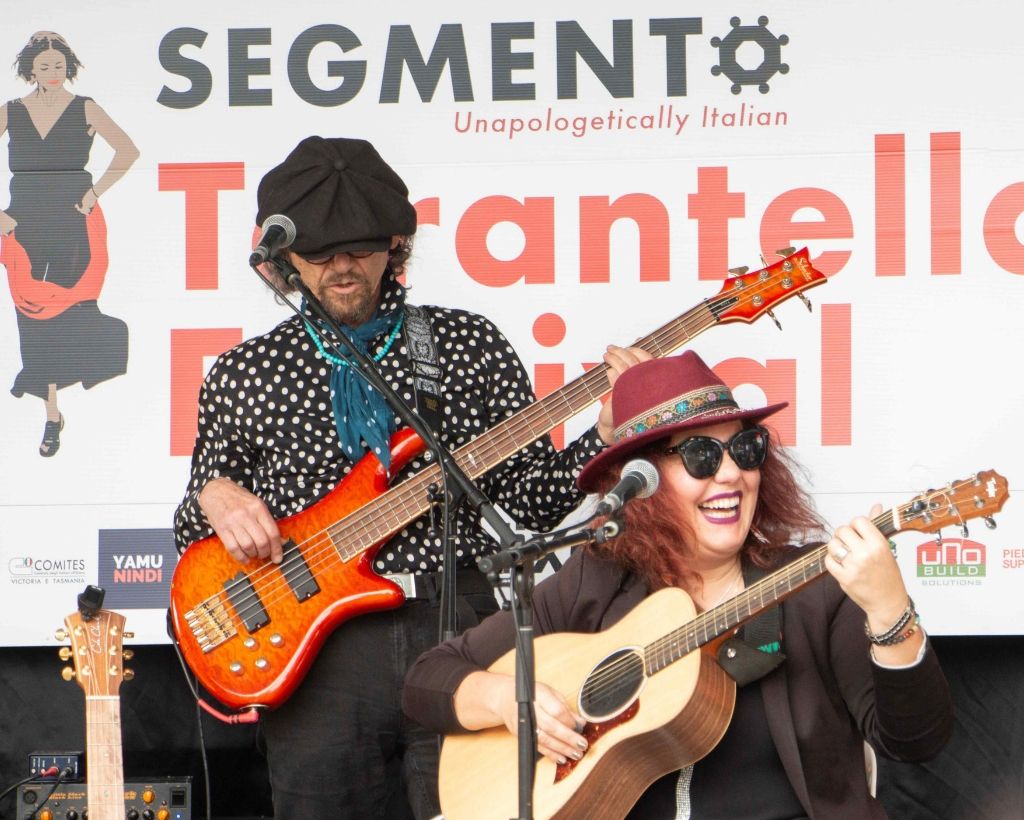
Special feature: Ancient Rhythms, New Expressions, Continuing Stories
The Segmento Tarantella Festival returns in 2026 with acclaimed artists whose music reflects the rich cultural landscape of Southern Italy, celebrating the enduring power of the tarantella as a force for connection, crea
Among the international artists returning to the 2026 festival is the much-loved Ciccio Nucera. A key figure since the festival’s beginnings, Nucera has naturally become its cross-cultural ambassador. His ongoing commitment has helped shape the Segmento Tarantella Festival into a meeting place where the sounds and traditions of Calabria connect with new generations of Italo-Australians and audiences discovering the tarantella for the first time.
Widely regarded as the “King of the Calabrian Tarantella”, Nucera has spent more than three decades preserving and promoting the music, dance and language of Greek Calabria. Through his work with the Cumelca Association, educational workshops and international collaborations, he has dedicated his career to keeping the songs, stories and expressions of his homeland vibrant and accessible.
That vision is embodied in his long-running project, La tarantella crea Dipendenza (“The Tarantella Creates Addiction”), a movement celebrating the irresistible energy of Calabrian folk music while encouraging people of all ages to dance, play and reconnect with their cultural roots. Its slogan has become synonymous with Nucera’s performances, drawing audiences into a joyous celebration of rhythm, participation and belonging.
Each return to Australia reinforces his belief that these traditions continue to resonate across generations. Nucera has spoken of “seeing young people enthusiastically embrace the tarantella” while older audience members “watch with smiles of recognition.” More than three decades after beginning his mission to share the culture of Greek Calabria, he remains a powerful reminder that music can carry memory and identity across borders, turning every performance into a meeting place for past and future generations.
Alessandro Santacaterina is a guitarist, composer and multi-instrumentalist from Brancaleone in southern Calabria. One of Italy’s most distinctive musical voices, he has earned international recognition for reinventing the chitarra battente, a traditional five-course folk instrument.
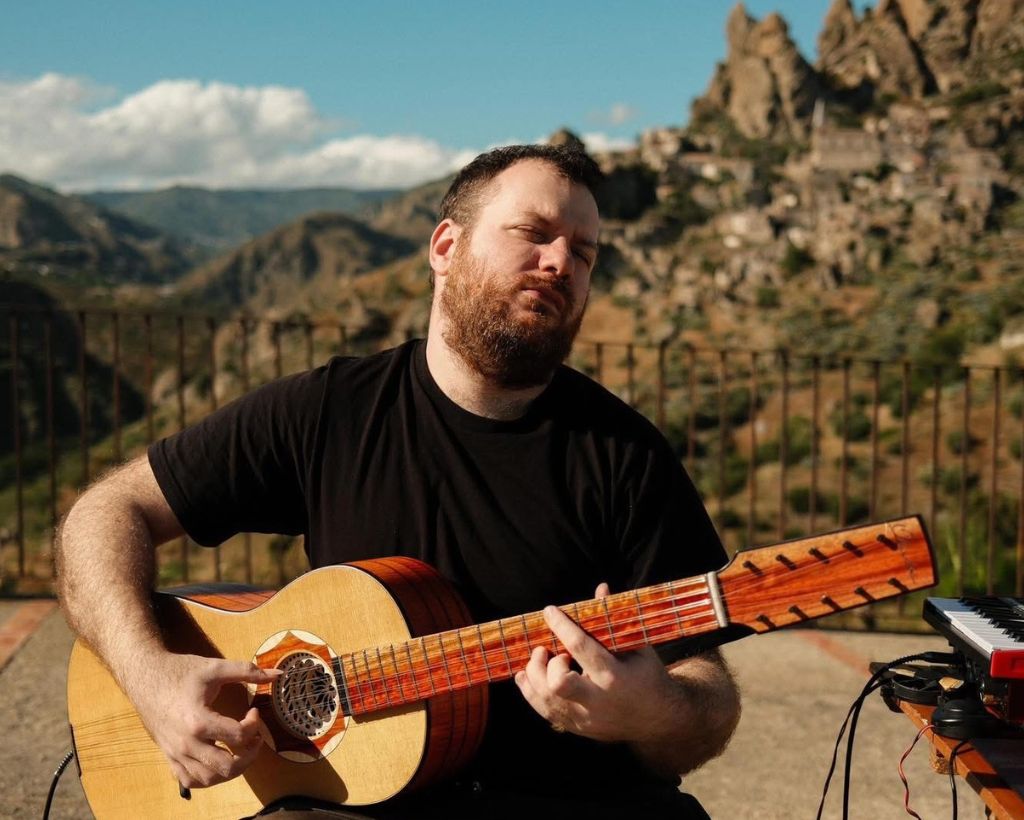
Building on the innovations of his mentor Francesco Loccisano, Santacaterina has expanded the instrument’s expressive range through new techniques, blending traditional folk music with Baroque influences, contemporary composition and subtle electronic textures. The result is a sound deeply connected to Calabria while embracing a distinctly modern perspective.
Santacaterina describes his music as telling the story of Calabria in much the same way Icelandic band Sigur Rós evokes the landscapes and spirit of its homeland. His compositions draw inspiration from the rhythms of the tarantella, the elegance of the passacaglia and the adventurous spirit of twentieth-century composers such as Bruno Maderna and Alberto Ginastera. Rather than simply preserving inherited forms, he transforms them into something fresh, personal and continually imaginative.
His career has included collaborations with Paolo Angeli, Luigi Cinque’s Hypertext Orchestra and the European CrossOpera project, where the chitarra battente appeared as a featured concert instrument in an opera for the first time. Despite performing internationally, Santacaterina continues to live in his hometown, remaining closely connected to the people, language and cultural landscape that inspire his work.
His appearance at the festival offers audiences a rare opportunity to encounter one of Calabria’s most innovative contemporary musicians—an artist demonstrating how an ancient musical language can remain authentic while reaching confidently into the future.
Another international, genre-bending act joining the festival is Ars Nova Napoli. The group began by busking in the streets and markets of Naples and has since performed across five continents, at major festivals and venues including Lincoln Center for the Performing Arts in New York. With the backing of the Italian Ministry of Foreign Affairs, one of their major tours was Neapolis 2500, for which they served as cultural ambassadors celebrating 2,500 years of Neapolitan history.
Ars Nova Napoli will bring the raw energy of Naples’ streets to the festival, layering centuries-old Southern Italian traditions with a vibrant contemporary sound. Audiences can expect exhilarating Neapolitan serenades, Apulian pizzica and foot-stomping Calabrian and Sicilian tarantelle, infused with Balkan, Greek and North African influences.
Driven by mandolin, accordion, guitar, trumpet, clarinet, frame drums and double bass, their performances are as much a celebration as a concert. From bustling street rhythms to explosive ensemble moments, Ars Nova Napoli transforms traditional music into a dynamic, cross-cultural experience reflecting Naples’ rich history as a Mediterranean trading port.
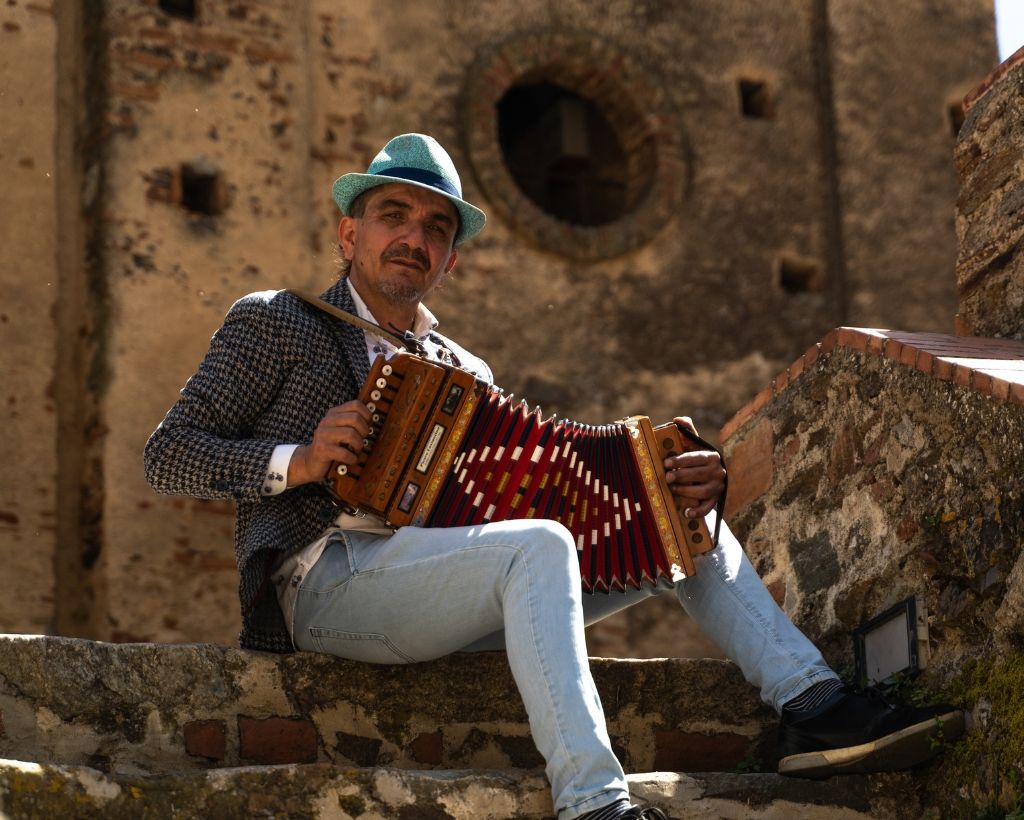
One of the most exciting inclusions in last year’s line-up was The Melbourne African Traditional Ensemble (MATE), a Pan-African music project founded by radio presenter and producer Stani Goma.
MATE shared the stage with international Italian folk music icons the Sabatum Quartet and Ciccio Nucera. The festival intentionally brought MATE’s traditional African drumming, dance and rhythms together with ancient Southern Italian tarantella music as an act of cultural diplomacy. This year marks their second appearance, giving both musicians and audiences another opportunity to explore the powerful common ground between these traditions.
MATE unites master musicians and tradition-bearers from across North East, Southern and West Africa. Audiences can expect an extraordinary acoustic performance featuring instruments including the kamalengoni, mbira, kalimbira, African percussion calabashes and Ethiopian ma emma senko.
Guided by the principle of Ujamaa, meaning familyhood and collective sharing, MATE creates music that celebrates community and cross-cultural understanding. Their return promises vibrant percussion, intricate melodies and powerful rhythms in a compelling celebration of cultural exchange.
Felice Paone, Elvira Andreoli and Tony Villella of The Rustica Project also return to the festival, this time taking on a new role as artistic directors. Alongside performing their signature blend of energetic Taranta-pop, Calabrian tarantella and regional Italian folk rhythms, they have helped shape this year’s program, including the selection of two local acts making their festival debut—the Sydney-based multicultural ensemble Scupriri and the Melbourne-based Sanacori.
Founded by musicians exploring their Southern Italian heritage, Scupriri draws inspiration from the diverse musical cultures of Calabria, Sicily and beyond. Rather than presenting a single, generic idea of Italian folk music, the band explores distinct regional styles including tarantella, pizzica and tamburriata, recognising each as a unique expression within Southern Italy’s broader musical landscape.
Authenticity sits at the heart of the group’s philosophy. As percussionist and vocalist Marco Pecora explains, “understanding the origins and meaning of these forms comes before reimagining them.” The band’s repertoire includes rare and historically significant tarantelle alongside familiar favourites, with performances adapted to different audiences while remaining respectful of the music’s foundations.
Each performance is enriched by the stories behind the songs. Audiences are introduced to tarantismo—the belief that ecstatic music and dance could heal the effects of the mythical spider’s bite—as well as the rituals, folklore and social history that shaped these powerful traditions. The result is a performance that is as illuminating as it is infectious.
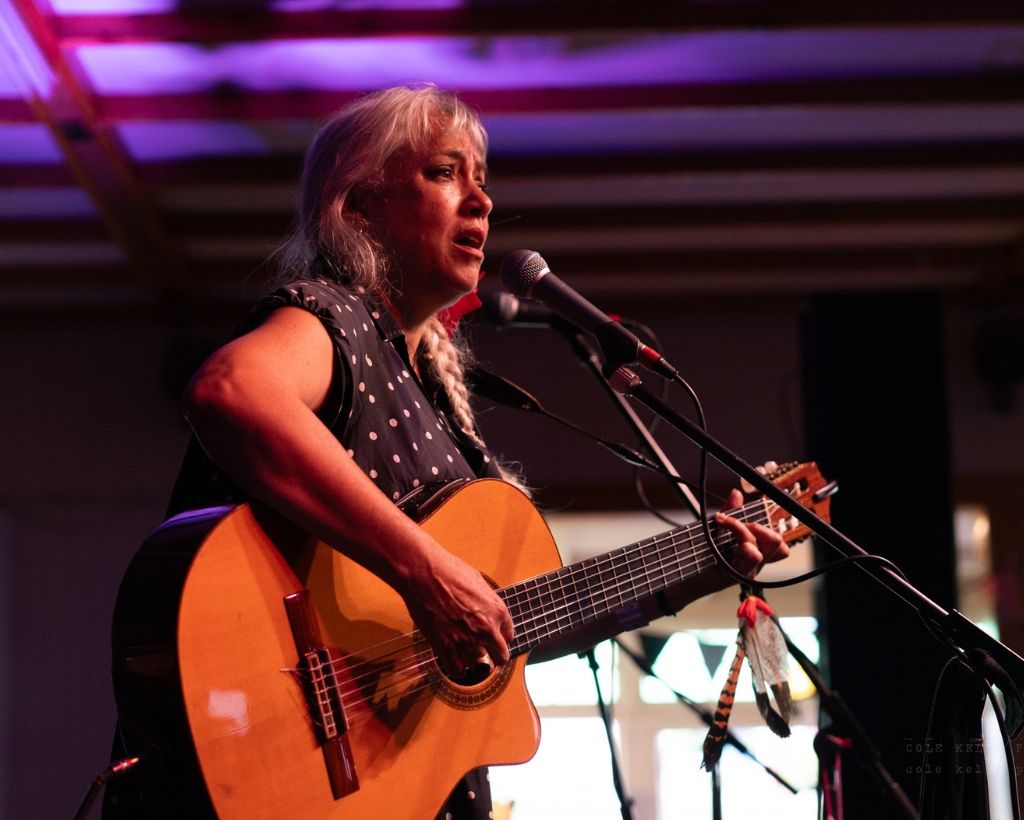
A new entry to this year's festival is a traditional Thai dance performance.
The Apsara Dance is a classical Thai dance performance reflecting the rich cultural, artistic, and spiritual influence of the ancient Khmer civilization in the Suvarnabhumi region. Inspired by the divine motifs and exquisite bas-reliefs of celestial nymphs sculpted on ancient stone temples, this dance showcases graceful, deliberate, and fluid movements.
What indeed would a tarantella festival be without tarantella dancing? Dancer Josephine Paone is another artist returning to the fold. A tarantella dancer, food scholar and cultural-influencer, Paone approaches tradition as something to be lived, shared and continually renewed.
She brings a deeply personal connection to Southern Italian culture, shaped by her Calabrian and Sicilian heritage and her life between Australia, Italy and Colombia. Drawing on her family traditions and multicultural upbringing, Josephine creates an energetic and participatory space where heritage, community and contemporary Italian-Australian identity come together.
For acclaimed singer-songwriter Kavisha Mazzella, the Segmento Tarantella Festival is much more than a music event—it is a place where culture, memory and community come together. A festival favourite returning in 2026, Mazzella sees each gathering as helping to “light an important cultural fire”, one that grows stronger with every generation that comes together to dance, sing and celebrate Southern Italian heritage.
She believes the festival plays a vital role in reconnecting families with their roots. As older generations pass on their stories and customs, Mazzella sees the festival creating continuity by welcoming younger people into the music, food and dances that shaped their families’ lives. For her, it recreates the spirit of an Italian village celebration—the only thing that has changed is the distance from Italy.
At the heart of that experience is the tarantella itself. Mazzella describes the dance as carrying “the power that only ancient things have”, connecting today’s dancers with countless generations before them. She embraces its enduring associations with healing, connection and collective celebration. “Once people step into the dance,” she says, barriers disappear and strangers become united.”
Mazzella believes the growing popularity of Southern Italian folk music reflects a broader desire for meaningful human connection in an increasingly fast-paced world. Festivals like Segmento, she says, nourish the spirit by bringing together the past, present and future in one joyful gathering.
Her performance will weave together music, storytelling and warmth, inviting audiences into the circle at the heart of every village celebration. In doing so, she highlights the tarantella as a living tradition that continues to bring people together across generations and cultures.

