



Having a whale of a time
Vanessa Pirotta speaks up for the giants of the sea
Marine scientist Vanessa Pirotta explains how innovative research, Indigenous collaboration and international partnerships are reshaping whale conservation—and why protecting humpback whales depends on science, sustainable tourism and global cooperation.
Whales have long fascinated people as titans of the sea. In the depths of the oceans, far from human sight, they help sustain healthy marine ecosystems. Recognisable for their distinctive long flippers and knobbly protuberances on their heads, humpback whales navigate Australian waters each winter and are the focus of many marine biologists. They were hunted almost to extinction for their commercial value in the early and mid-20th century, prompting the International Whaling Commission to ban commercial whaling in the Southern Hemisphere. Since 2008, humpback whales have been classified as a species of least concern, and their population is now estimated at around 36,400 individuals.
According to one of Australia’s most renowned wildlife scientists, Dr. Vanessa Pirotta, whales “regulate carbon cycles, connect nations and are essential indicators of the ocean’s wealth.” They play a significant role in climate regulation through their natural capacity to store around 33 tonnes of carbon in their bodies, which is locked away when they die and sink to the ocean floor. Beyond carbon sequestration, whales act as early indicators of environmental change because of their long lifespans and position at the top of the food chain. They also hold “a growing economic, in addition to ecological, value, driven by the expansion of whale-watching and other tourism activities.”
Although Pirotta was born on a farm outside Canberra, her fascination with the ocean was sparked in childhood by “reading books about whales, watching Free Willy and following David Attenborough’s broadcasts.” Later, while studying at ANU, she volunteered as a dolphin trainer and, after graduating, accepted a position in Coffs Harbour, convinced she “would have been a dolphin trainer for the rest of her life.”
Life had other plans. A personal loss brought her back to Canberra, where she worked for the federal government before finding her way into academia and becoming the internationally recognised marine scientist she is today. By pursuing her childhood interests, Pirotta has forged to a career beyond anything she had imagined.
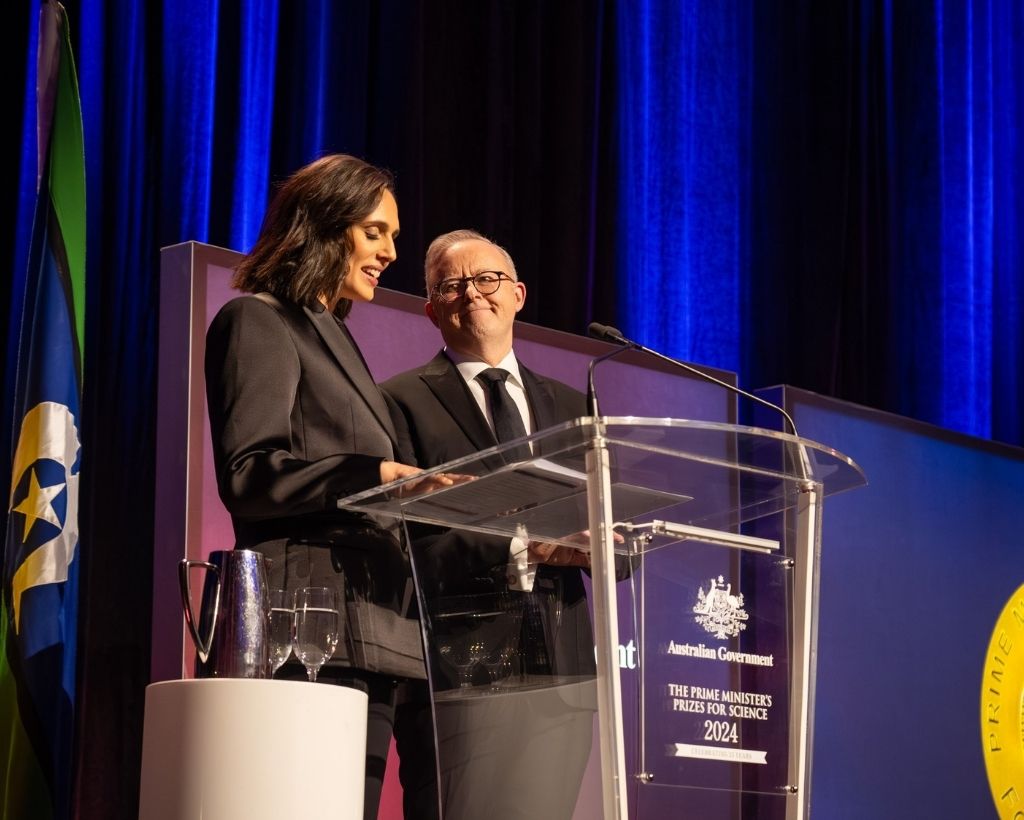
During her PhD at Macquarie University, she developed a groundbreaking drone capable of collecting whale snot. The technology captures blow samples as whales surface to breathe without touching them. “It’s the way forward,” says Pirotta, because it enables scientists to analyse whale health without disrupting their natural behaviour, unlike the invasive practices of the past.
Raised in Australia with Maltese and Italian heritage, Pirotta was instilled with a strong sense of determination, hard work and, above all, respect for family traditions and older generations. Those values have shaped her connection with First Nations communities.
“I have just come to realize how important my roots are when it comes to working with them. The deep respect for the eldest and for the community feels very familiar,” she explains. “They remind me of my nonnos and nonnas.”
This connection has strengthened since 2022, when she started working with the Gamai rangers on pioneering marine mammal research in Sydney Harbour and Botany Bay. The initiative brings together a multi-generational team to better understand whales in an urban environment while strengthening the Gamai people’s relationship to their Country. Here, the humpback whale—known as Burriburri—is their spiritual ancestor. For Pirotta, the collaboration is built on reciprocity: she mentors First Nations scientists while embracing their traditional knowledge in a “two-way learning system.”
“Much of what science is discovering about whale migration, communication and seasonality has long been observed and shared by the Elders,” she explains.
That perspective extends beyond Australia. When discussing the economic value of whales, Pirotta is clear that tourism must be underpinned by science, with the priority being “ensuring the longevity and sustainability of whales.” This approach led her to join the Tongan Whale Tourism project, a grassroots initiative in collaboration with Vava’u Environmental Protection Association (VEPA) and the Kingdom of Tonga Government.
After more than a decade visiting the region, she realised tourism practices had not kept pace with growing demand for whale watching and swimming with humpback whales. According to Pirotta, tourism remains a blind spot despite strong protections for whales. She will work with tourism operators to ensure economic benefits do not come at the expense of marine conservation. The goal is to apply Australia’s approach to whale conservation and responsible tourism to protect these shared resources. As Pirotta points out, whales “do not possess a passport” and migrate regardless of borders, making “a mutual program of protection and shared knowledge essential.”
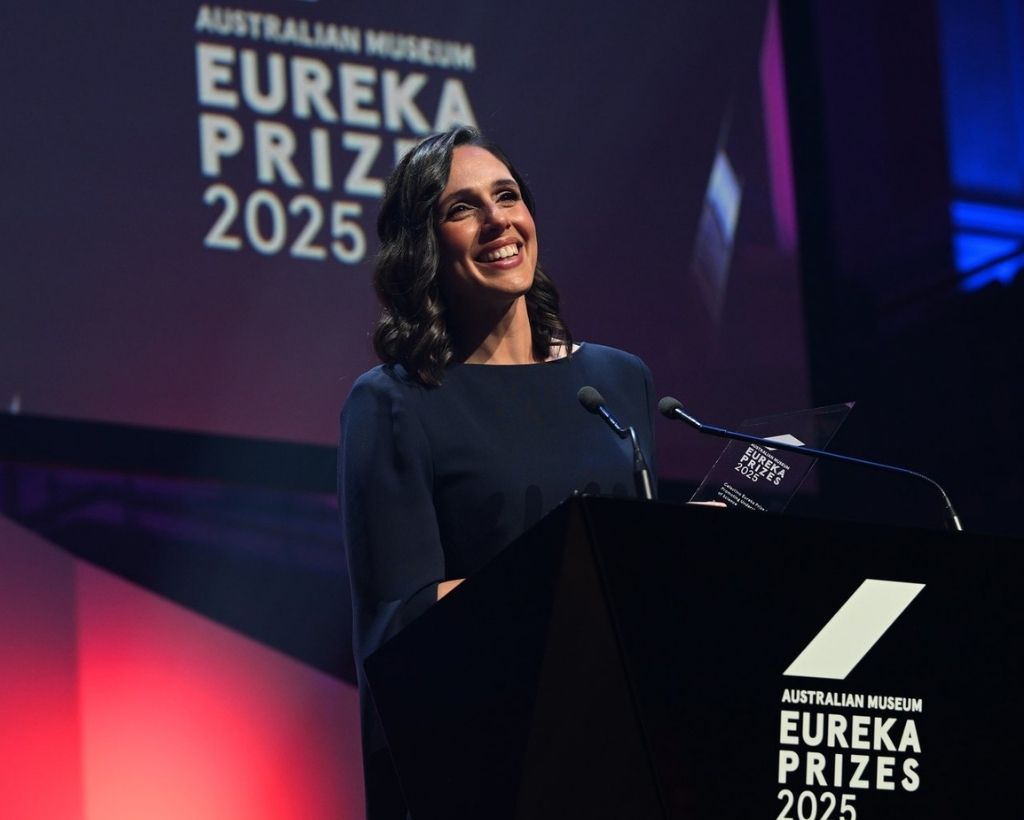
Managing projects like these has emphasised the importance of interdisciplinary approaches, as well as the challenge of engaging with a diverse range of stakeholders, including local communities, governments and international organisations.
This borderless approach to whale conservation will be addressed at the 70th Meeting of the International Whaling Commission in Hobart this September. Although she will not attend, Pirotta hopes countries will renew their commitment to international co-operation and that scientists will play a stronger role in connecting political decisions with the wider public. “Governments are making decisions, but they do not connect with the young public. There is a need to create a bridge between generations,” she explains.
Looking ahead, Pirotta aspires to visit the Pelagos Sanctuary for Mediterranean Marine Mammals. Jointly managed by Italy, France and the Principality of Monaco, the sanctuary balances human activity with marine conservation. She is particularly fascinated by Prince Albert II of Monaco’s long-standing commitment to the area. “I’d love to meet the prince and exchange ideas on conservation,” she says. Pirotta even sent him copies of her books. Whether they ever reached him, she still does not know—but she remains hopeful that one day the conversation will happen.

