


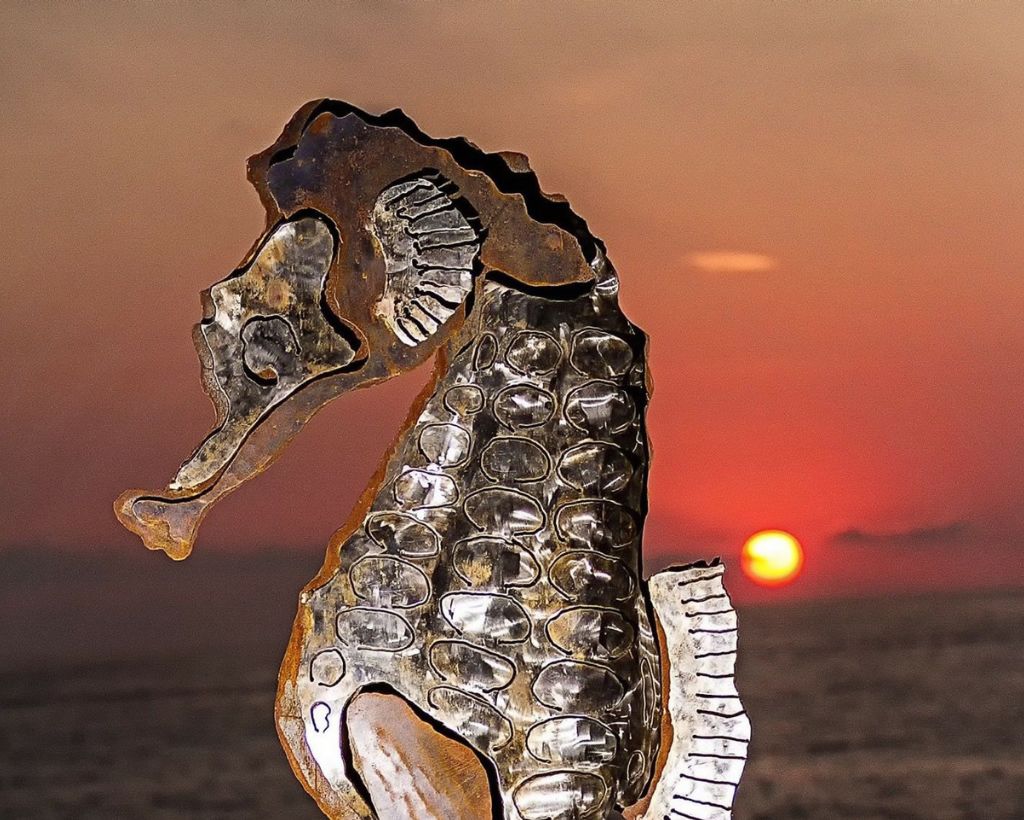
Soul in the iron
A lifetime spent transforming hard matter into expressions of humanity, faith, and memory has led Cosimo Allera to one of his most ambitious visions yet.
For Cosimo Allera, sculpture begins where technique ends. Raised in Calabria amid the fire, iron and sound of his father’s forge, he learned to weld almost before he understood that what he was making could be called art. Today, after decades of creating monumental works in Italy and abroad, Allera is still driven by the conviction that an artist must give something of himself to matter. His creations speak of humanity, spirituality, justice and hope, while his extraordinary proposal for two monumental sculptures overlooking the Strait of Messina reveals an artist determined to dream on a scale worthy of his homeland.
There is something revealing about the way Cosimo Allera speaks about iron. He does not describe it simply as a material to be cut, welded or bent. He talks about giving it life.
Perhaps that relationship was inevitable. Born in Gioia Tauro in 1962, Allera grew up in the workshop of his father, Salvatore, a skilled Calabrian blacksmith. Those early years beside his father laid the foundation for his lifelong relationship with metal. By six or seven, he already knew how to weld. At ten, he was assembling pieces of iron that he thought of simply as constructions, but which, looking back, he now recognises as his first works of art.
The workshop became his academy. Although Allera later qualified as a surveyor, he never pursued formal training as an artist. He describes himself proudly as self-taught, not because he rejects knowledge but because he feared that formal schooling might impose another’s language upon him. He wanted to experiment and discover what materials could do through direct contact with them.
That instinct has remained central to his practice. Iron and steel are his most recognisable media, but his curiosity extends to bronze, marble, wood and paper. For Allera, mastery of material is inseparable from artistic intuition: the hand discovers possibilities that theory alone cannot teach.
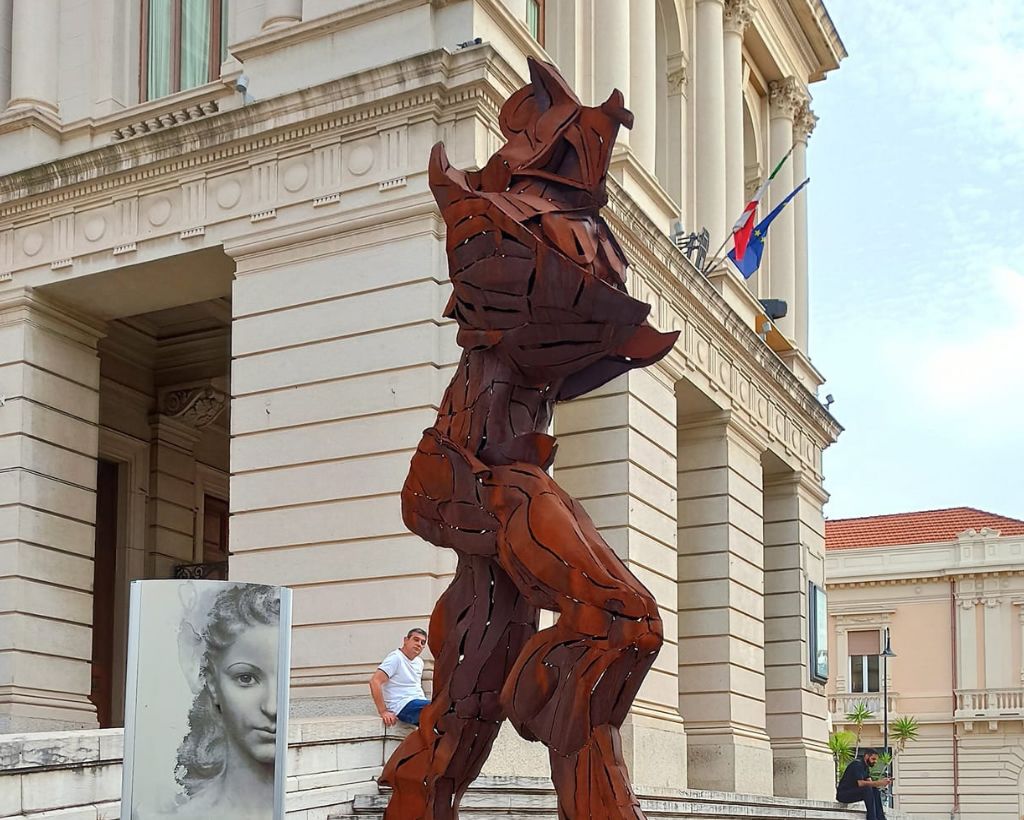
His public artistic career began in the 1980s, followed by decades of exhibitions, symposia and projects in Italy and abroad, including Spain, Portugal and Belgium. Yet lists of exhibitions reveal only part of the story. Allera has long been drawn to public spaces and open landscapes: streets, churches, parks and mountains where sculpture encounters people who may never deliberately enter a gallery.
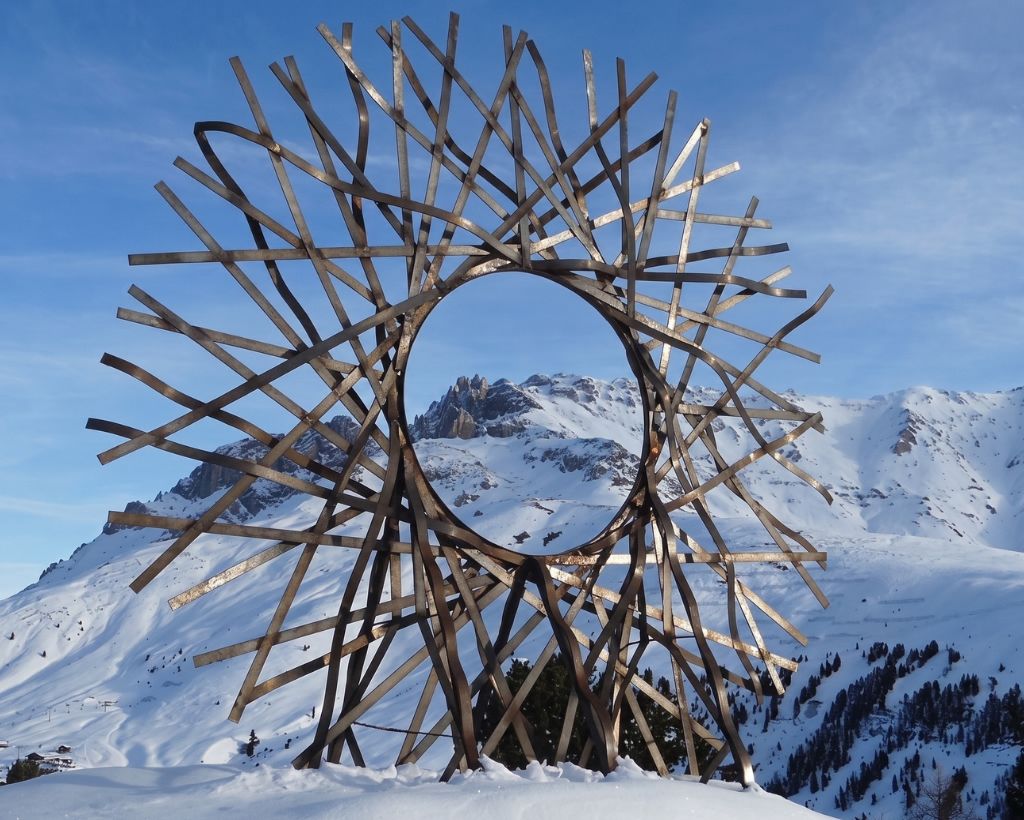
Among his notable works are the Cristo at the sanctuary of the Immaculate Heart of Mary in Paravati; L’Ombra della Sera, created with visionary Calabrian artist Nik Spatari at MuSaBa in Mammola; and his six-metre tribute to Umberto Boccioni in Reggio Calabria, an interpretation of Unique Forms of Continuity in Space. At RespirArt in the Dolomites, where contemporary installations inhabit an extraordinary landscape roughly 2000 to 2200 metres above sea level, Allera’s sculpture enters into dialogue with mountain, sky and silence.
Again and again, however, Allera’s attention turns to humanity—its faith, vulnerability, identity and sense of responsibility. This was already evident in L’umanità e la croce, commissioned in 1988 and installed outside Gioia Tauro railway station. That same concern is also present in his memorial art. In September 2025, his sculpture dedicated to Judge Rosario Livatino was unveiled at the site near Canicattì where the magistrate was murdered by the Mafia 35 years earlier. This is art serving both to preserve memory and to affirm justice.
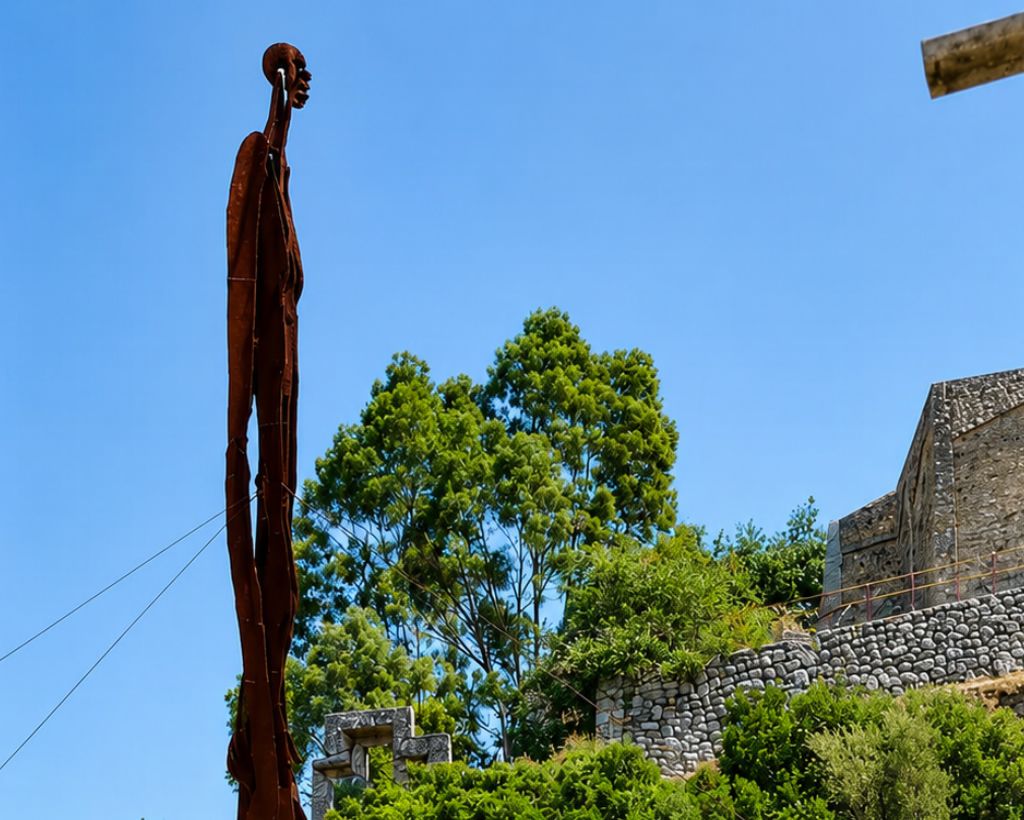
His interest in Carlo Acutis reflects the same concern with faith. Allera was drawn to the young Italian’s story years before Acutis became one of the most recognisable figures of contemporary Catholic spirituality. Acutis was canonised by Pope Leo XIV on 7 September 2025. For Allera, such subjects are not simply religious commissions; they are opportunities to explore what remains luminous in the human being.
Allera is not opposed to progress. What concerns him is the possibility of confusing technical sophistication with art. A machine can execute an immaculate cut; artificial intelligence can generate an image; technology can facilitate processes that once demanded enormous labour. But for him, something essential disappears when the hand, heart and struggles of the maker are removed entirely from the creative process.
“A creation of art must contain the artist,” he says.
He once encountered olfactory art at the Venice Biennale, an experience that challenged his assumptions about what an artwork could be. He remains open to experimentation, but his criterion is profoundly simple: whatever the medium, the artist must place something of his or her soul into it.
“Creation sometimes feels almost magical,” he says. Even after decades of experience, he cannot always explain how an idea takes physical form. It is as though the work occasionally knows where it wants to go before he does.
And Allera is still imagining.
His most audacious vision concerns the two former electricity pylons facing each other across the Strait of Messina. Inspired by the Bronzes of Riace, he imagines the existing pylons transformed into colossal sculptural figures, approximately 240 metres high, one on the Calabrian side and the other on the Sicilian side. Once used to carry electricity across the Strait, the pylons would become the internal structures of gigantic works clad in weathering steel. Allera has described the proposal as deliberately ambitious: monumental sculptures that would surpass the height of the Statue of Unity in India and become a powerful international symbol of the Strait.
He speaks of the project without the possessiveness one might expect from an undertaking of such scale. He says he is willing to contribute the artistic concept without seeking personal enrichment. “What matters,” he says, “is leaving something behind for Calabria.”
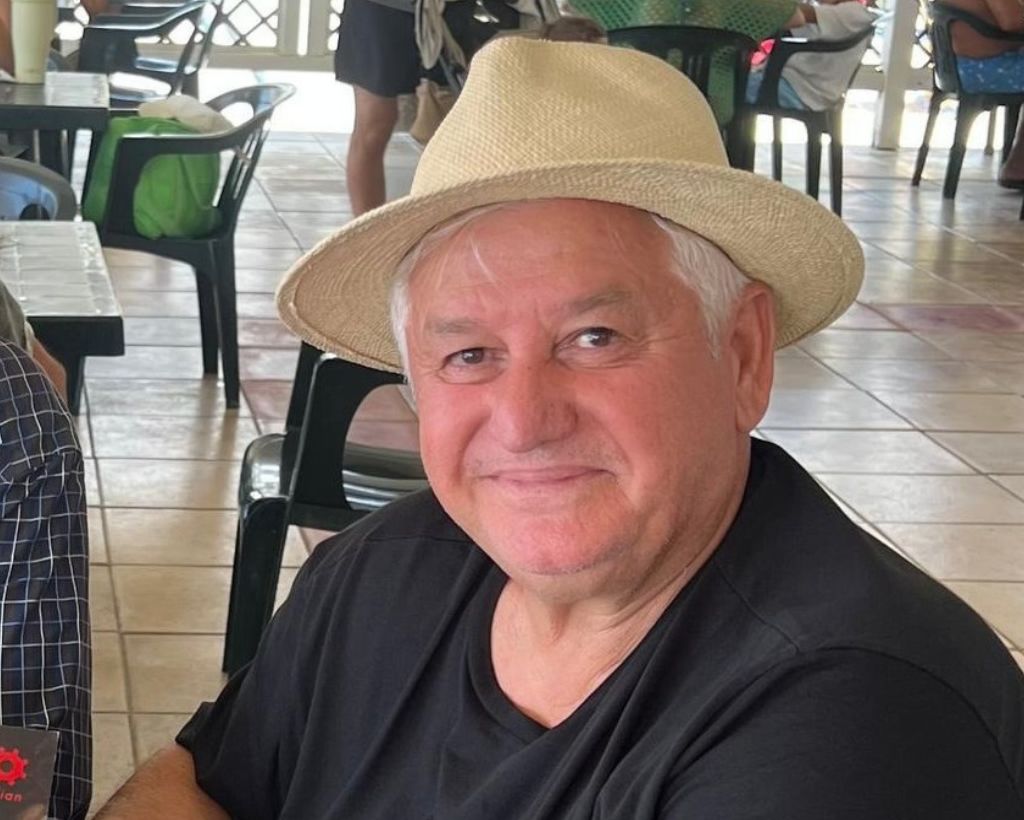
That generosity says much about Cosimo Allera. The boy who learned to weld beside his father never completely disappeared. The boy is still there whenever Allera approaches a resistant piece of metal and imagines something inside it that others cannot yet see.
His art is ultimately not about conquering iron, but about revealing what iron can carry: memory, pain, faith, dignity, hope—and perhaps a fragment of the human soul.

