


Driven by Design
At the Museo Fratelli Cozzi in Legnano, Elisabetta Cozzi has turned her family’s historic Alfa Romeo collection into a celebration of Italian design, memory, women and contemporary culture.
For Elisabetta Cozzi, Alfa Romeo has never been simply a car brand. It is family history, Italian design, industrial culture and emotional identity. More than sixty Alfa Romeos are the protagonists of a carefully choreographed exhibition at the Museo Fratelli Cozzi. Yet the museum’s real significance lies in the way Cozzi has expanded her father’s legacy into a contemporary cultural project embracing women, young people, accessibility and social inclusion.
Some people inherit jewellery, paintings or family houses. Elisabetta Cozzi inherited a passion.
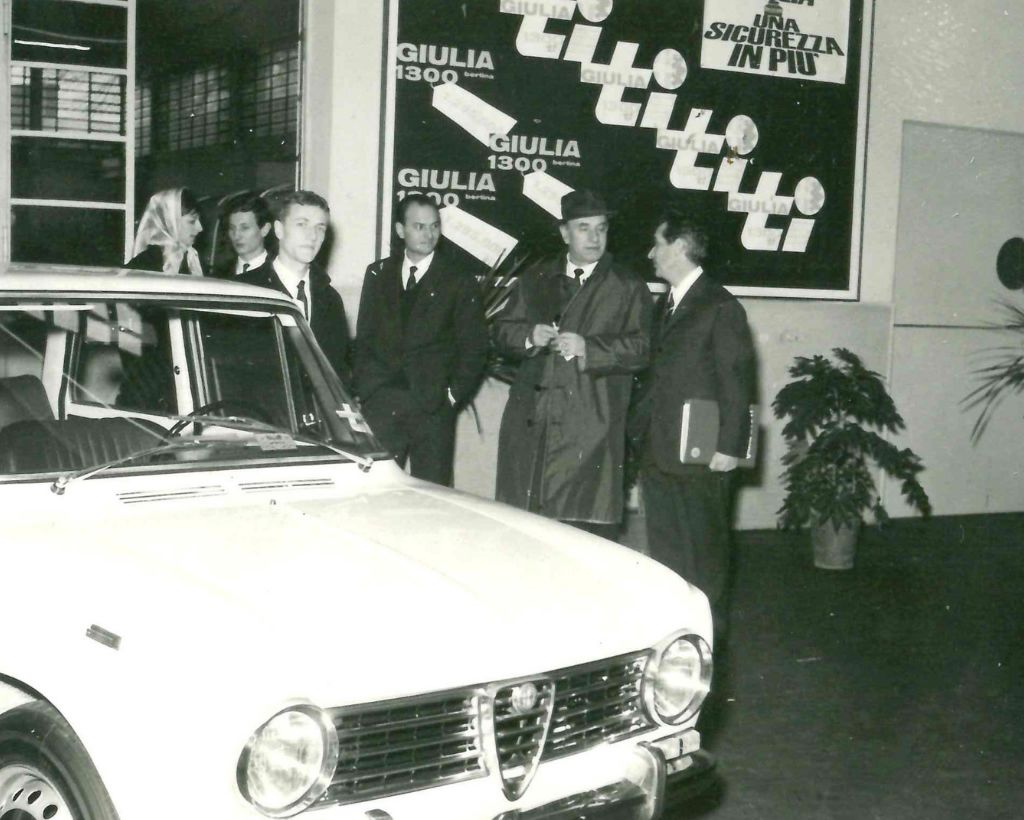
Alfa Romeo is inseparable from her earliest memories. Her father, Pietro Cozzi, founded the Fratelli Cozzi dealership in Legnano in 1955, when he was only nineteen. Italy was entering the extraordinary years of the economic miracle and the motor car was becoming one of the most visible expressions of modernity, freedom and aspiration. For the Cozzi family, however, Alfa Romeo became something even more personal.
As Elisabetta recalls, the name was heard so constantly at home and in the dealership that, as a child, she became convinced her full name was “Elisabetta Cozzi Alfa Romeo.”
It is a charming story, but it also reveals the emotional foundation of the Museo Fratelli Cozzi.
Pietro Cozzi did something unusually farsighted. At a time when an old automobile was generally regarded as obsolete, he began preserving examples of Alfa Romeo rather than disposing of them. More importantly, he preserved documents, photographs, correspondence and objects connected with the cars. What he saved was therefore not only a collection, but a fragment of Italy’s industrial and social history.
When Pietro turned eighty in 2015 and the family business celebrated its sixtieth anniversary, Elisabetta decided that this private inheritance deserved to become public.
The result was the Museo Fratelli Cozzi.
From a style and design perspective, the museum is particularly fascinating because an Alfa Romeo has never been merely a machine. For more than a century, Alfa Romeo’s marque has balanced engineering with visual seduction. Its identity has been shaped by sporting innovation and a deep commitment to design, from its racing heritage to iconic models created in collaboration with celebrated Italian designers and its own Centro Stile.
An Alfa is therefore read almost as one might read a piece of fashion: through proportion, surface, silhouette and attitude.
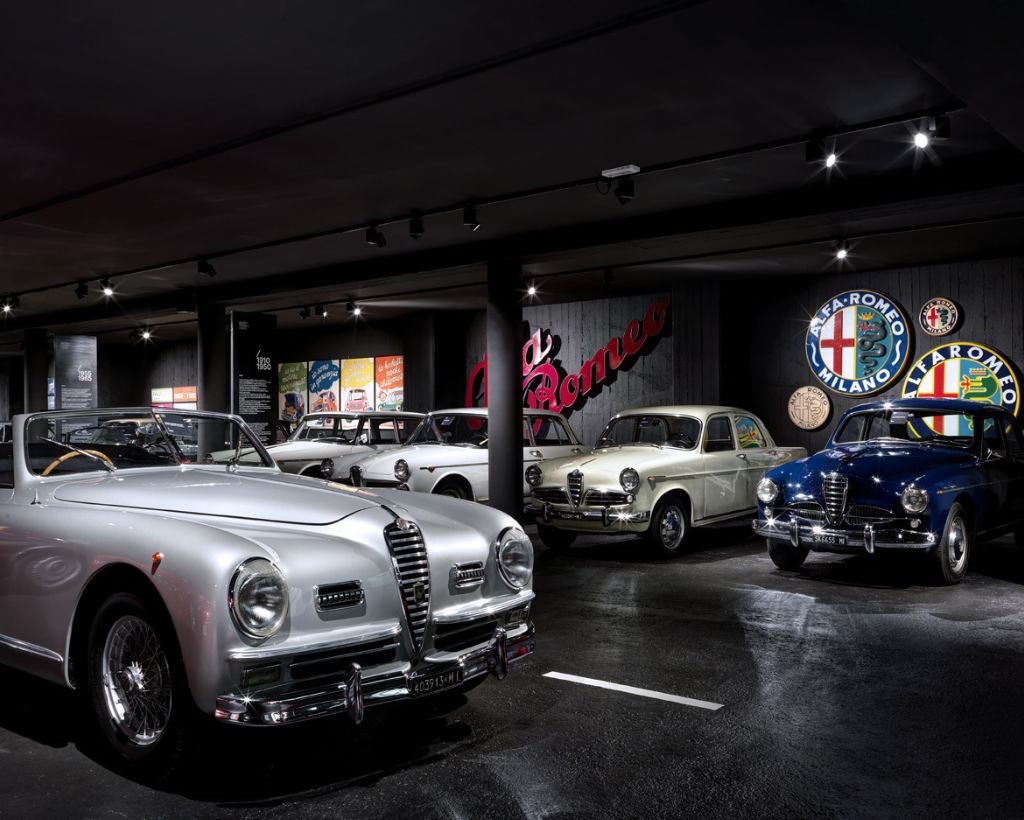
Elisabetta understands this instinctively. She did not want the collection displayed in a conventional, garage-like museum. Instead, internationally recognised architects Gabriele and Oscar Buratti were commissioned to create an architectural experience in which the environment itself became part of the narrative.
Their concept unfolds through three essential colours.
First comes white, defining the exterior architecture. Then comes Alfa red, encountered through an immersive environment that acts almost as a psychological transition between everyday life and the world of the brand. Finally comes black, used to visually dissolve the surrounding architecture, allowing the cars to emerge dramatically, almost like sculptures under theatrical light.
Museimpresa, the Italian Association of Business Archives and Corporate Museums, describes Museo Fratelli Cozzi as a unique connection between automobiles and architecture, highlighting this same transition from white to dazzling red and finally to a black surface reminiscent of the road itself.
The effect is remarkably close to fashion exhibition design.
The object is isolated, elevated and made desirable. Bodywork becomes sculpture. Chrome becomes jewellery. The curve of a bonnet, the angle of a windscreen or the tension of a wheel arch reveals how deeply automobile design belongs to the broader story of Made in Italy.
Yet what makes Elisabetta Cozzi’s project especially contemporary is her refusal to stop at beauty.
Today, the museum has evolved into a hub for exhibitions, ideas, events, education and cultural exchange. Its cars become points of departure for conversations about design, cinema, fashion, advertising, industry, politics and the economic transformation of post-war Italy.
That evolution also reflects Elisabetta’s own experience as a woman operating in a world traditionally associated with men.
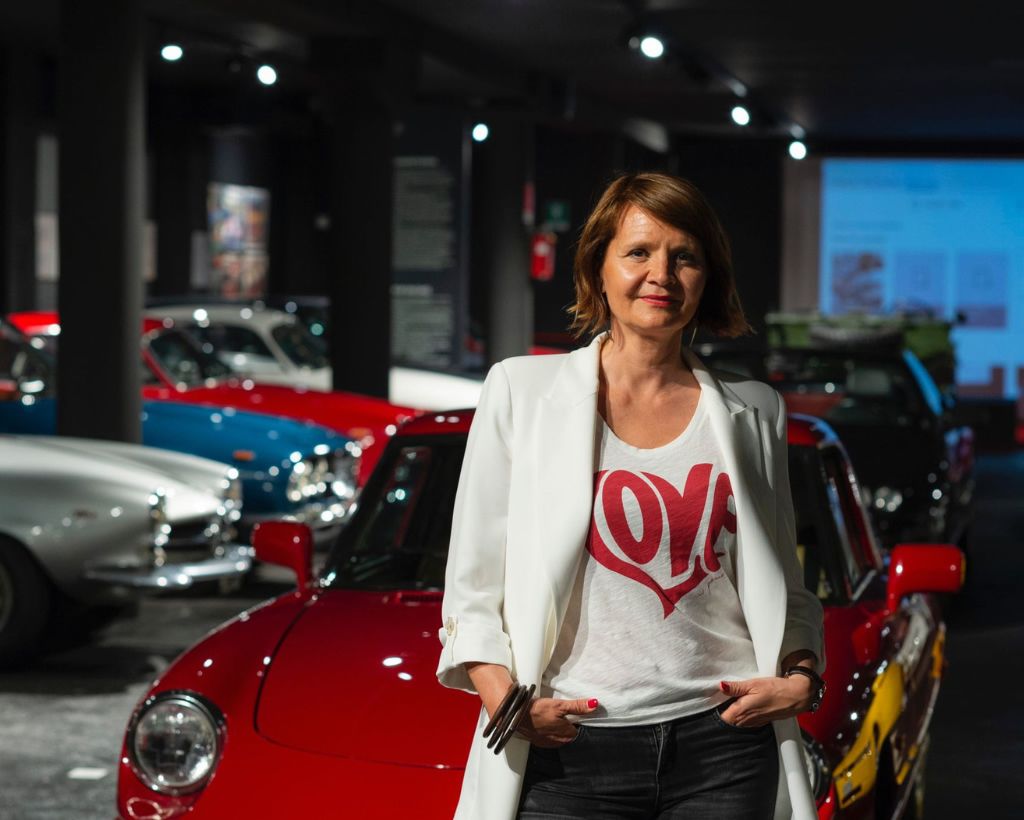
One of the museum’s most significant initiatives is Donne e Motori? Gioie e Basta, a photographic project that deliberately challenges the tired stereotype linking women and automobiles through objectification. Instead, women distinguished by their professional and personal achievements are portrayed alongside historic cars with dignity, character and individuality.
Now in its fourth edition, the project has developed into a travelling exhibition, continuing to promote a different visual language around women and motoring. The museum’s aim is to create an automotive imagination based on respect, competence and beauty.
Here, design is used not merely to make objects attractive, but to change the way we look at people.
The museum extends that philosophy further through initiatives supporting younger generations and people with disabilities. Elisabetta sees the institution as a cultural enterprise with social responsibilities, rather than simply a repository of valuable cars.
And the cars themselves remain alive. They are maintained, certified, kept operational and still participate in events such as the Mille Miglia and Gran Premio Nuvolari.
Perhaps that is the perfect metaphor for the entire museum. The past is not placed behind glass and allowed to become silent. It moves. It makes noise. It creates encounters.
Through Elisabetta Cozzi’s vision, the extraordinary aesthetic language of Alfa Romeo becomes something larger: a way of talking about Italian creativity, industrial memory, women, inclusion and the emotional power of beautifully designed things.
Because great design is never only about appearance. It is about the stories, identities and emotions that an object is capable of carrying through time.

