


Science and Tradition
When heritage inspires innovation
The most meaningful innovations often begin with knowledge inherited from the past. Innovation doesn’t always mean replacing the old with something new. Sometimes, it means using new technology to preserve human skills and carry them forward.
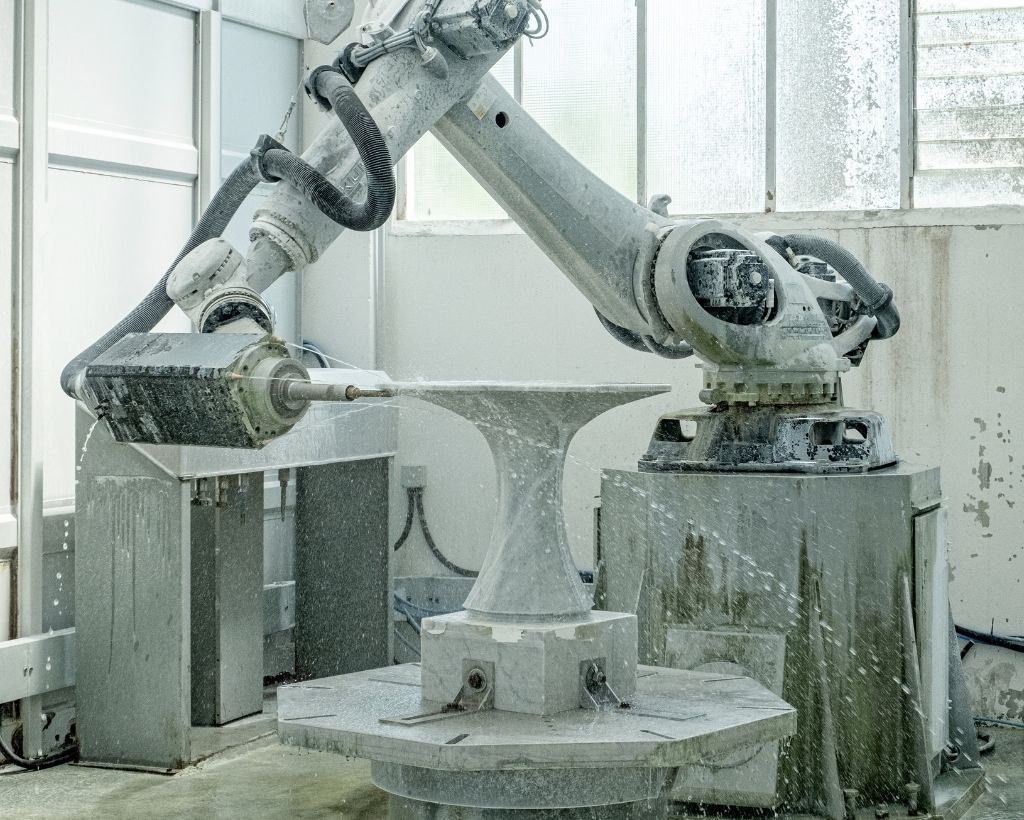
There is something deliberately provocative about the image on the cover of this edition of Segmento: a robot carving a sculpture from marble.
For centuries, the image of the Italian sculptor has been inseparable from the human hand—the hammer, the chisel, the dust of Carrara marble and the physical relationship between artist and stone. Michelangelo famously imagined the figure already imprisoned within the block, waiting to be set it free. Today, beside the sculptor, another arm is at work. It is made not of flesh and bone, but of steel, motors, sensors and code.
Does this represent the end of century-old traditions of craftmanship and knowledge? Perhaps it represents precisely the opposite.
Human history rarely progresses through a simple choice between old and new. As our cover image suggests, humanity advances through a delicate balance: preserving what is valuable from the past while embracing new possibilities. Science looks forward through research and experimentation; tradition carries knowledge, identity and values across generations. Their greatest potential emerges when they work together.
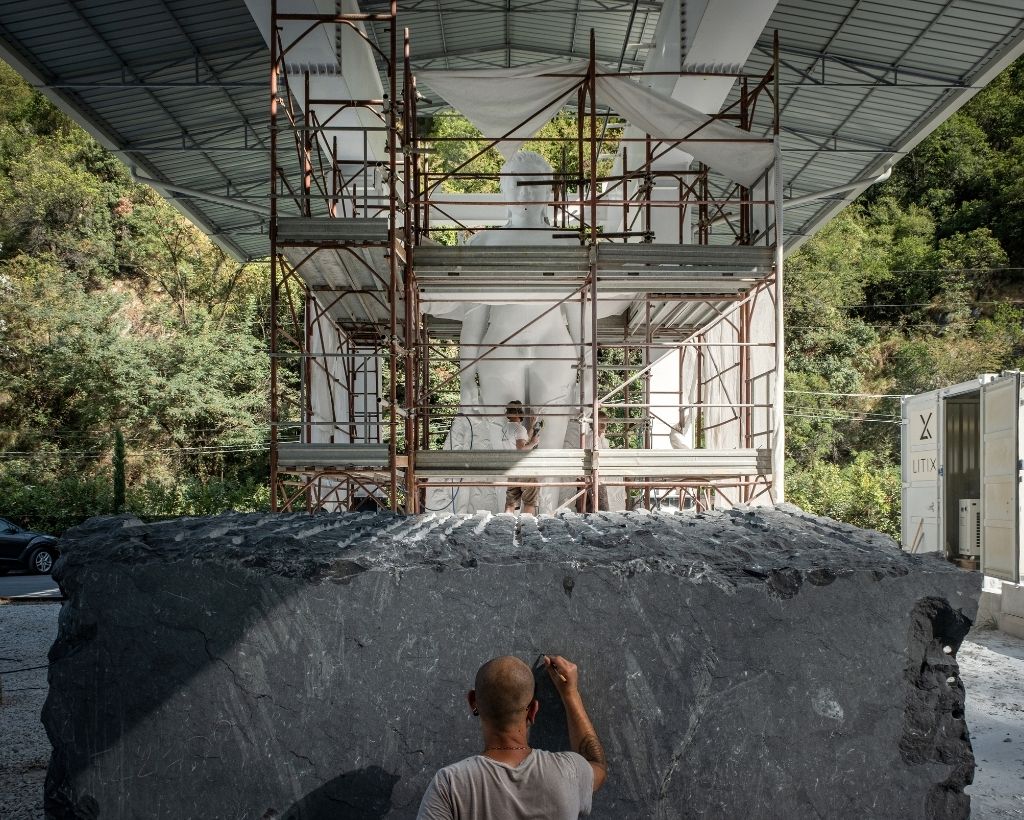
Few places illustrate this better than Carrara. Here, a culture of stone developed across centuries. Generations learned how marble behaves: where it fractures, how light penetrates its surface, how a seemingly immovable block can become a face, a body or a fold of fabric. That accumulated knowledge is cultural heritage in its most practical form.
LITIX is an Italian company that has brought this heritage into dialogue with robotics, digital modelling and artificial intelligence. Its TORART laboratory was born in Carrara specifically around the relationship between art, technology and material, while ROBOTOR applies multi-axis industrial robots to the carving of stone. Yet the philosophy behind the system is significant: technology is conceived as a means to amplify human talent rather than replace it.
The process makes the relationship even clearer. A sculpture may begin with an artist’s clay or digital model. Three-dimensional scanning can translate an existing physical form into digital information; robotic systems perform the demanding rough carving; and skilled sculptors subsequently complete surfaces, details and textures by hand.
The machine, therefore, has not abolished the hand. It has changed where the hand is most valuable.
This distinction is important. Innovation becomes culturally meaningful not when we ask, What can a machine do?, but when we ask, What can human beings do differently because of it?
The same dialogue between science and heritage can be found in an apparently very different place: inside the Cathedral of Lucca.
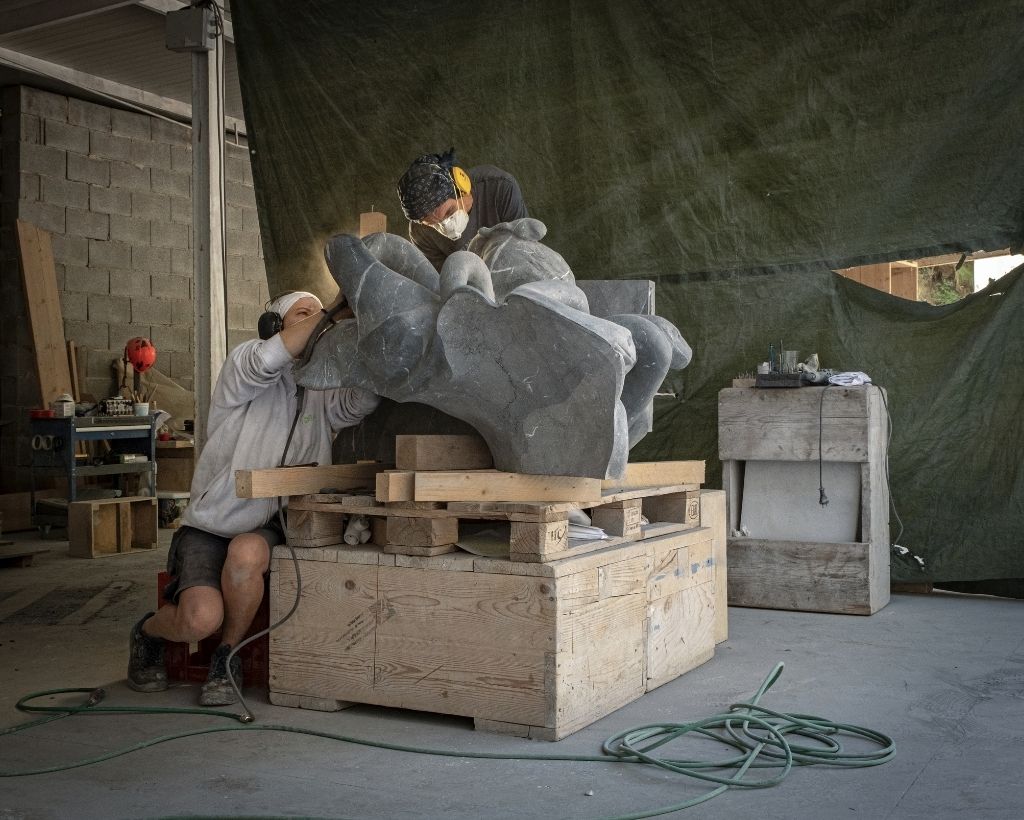
In his photographic project La Croce è viva, Michele Martinelli documents the restoration of the Volto Santo, the monumental wooden crucifix at the heart of centuries of religious devotion in the city. His photographs move between pilgrimage, ritual, human faces and the conservation laboratory. We see restorers leaning closely over the sculpture, cleaning and retouching its surfaces with extraordinary care.
Here, science does not manufacture something new. It allows us to understand and preserve something ancient.
Material analysis and conservation knowledge reveal information that tradition alone could not provide. The cross itself contains different woods: the vertical section is chestnut, while the horizontal arm is cedar, a material whose presence opens questions about origin, movement and the historical world in which the work was created.
And yet Martinelli’s photographs remind us of something equally important: an artwork is more than its material composition.
The Volto Santo lives because people continue to gather around it, pray before it, carry its image through the streets and transmit its meaning from one generation to another. After the long restoration, the sculpture is being returned not simply to a building, but to a community.
This is where science and tradition truly meet. One preserves matter; the other preserves meaning.
The robot in Carrara and the conservator in Lucca may appear to inhabit different worlds, but they are part of the same story. Both use contemporary knowledge to extend the life of something inherited. One takes an ancient craft and gives it new technological possibilities. The other uses modern conservation to protect an object whose cultural significance has endured for centuries.
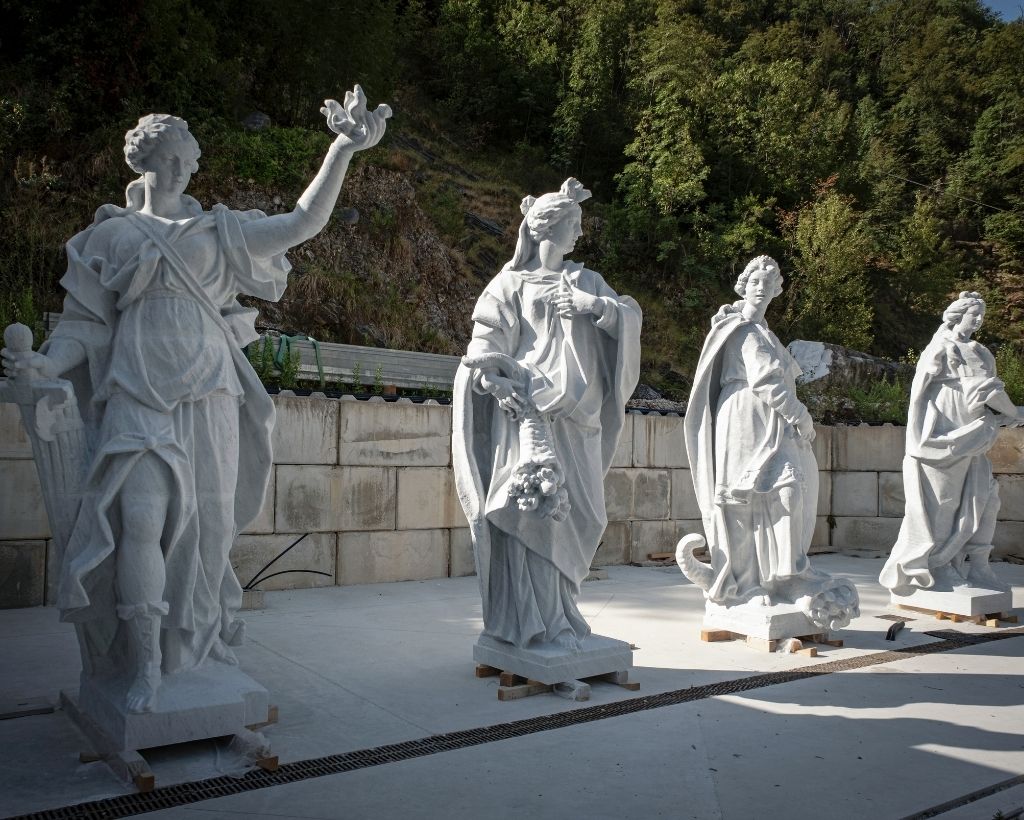
Italy has always innovated in this way. The Renaissance did not emerge by rejecting antiquity, but by rediscovering it. Artists studied anatomy to paint the human body. Architects examined Roman buildings to construct new ones. Engineers, artisans and artists crossed disciplines constantly.
Perhaps our age is no different.
The technologies have changed—3D scanning, robotics, digital modelling, artificial intelligence—but the underlying impulse remains deeply human: to understand, to create and to transmit.
Cultural heritage should therefore never be treated as something preserved behind glass, protected from the future. Its real power lies in its capacity to be carried forward and reinterpreted in the present. Tradition and innovation can sometimes be in tension, but are at their most productive when they become interdependent.
For more information, contact:
Michele Martinelli
@michelemartinelliphotography
Marty.Nelli@virgilio.it
michelemartinelliphotography.com

