


A modern Italian voice in Canberra
Italy's new ambassador envisions stronger Australian ties
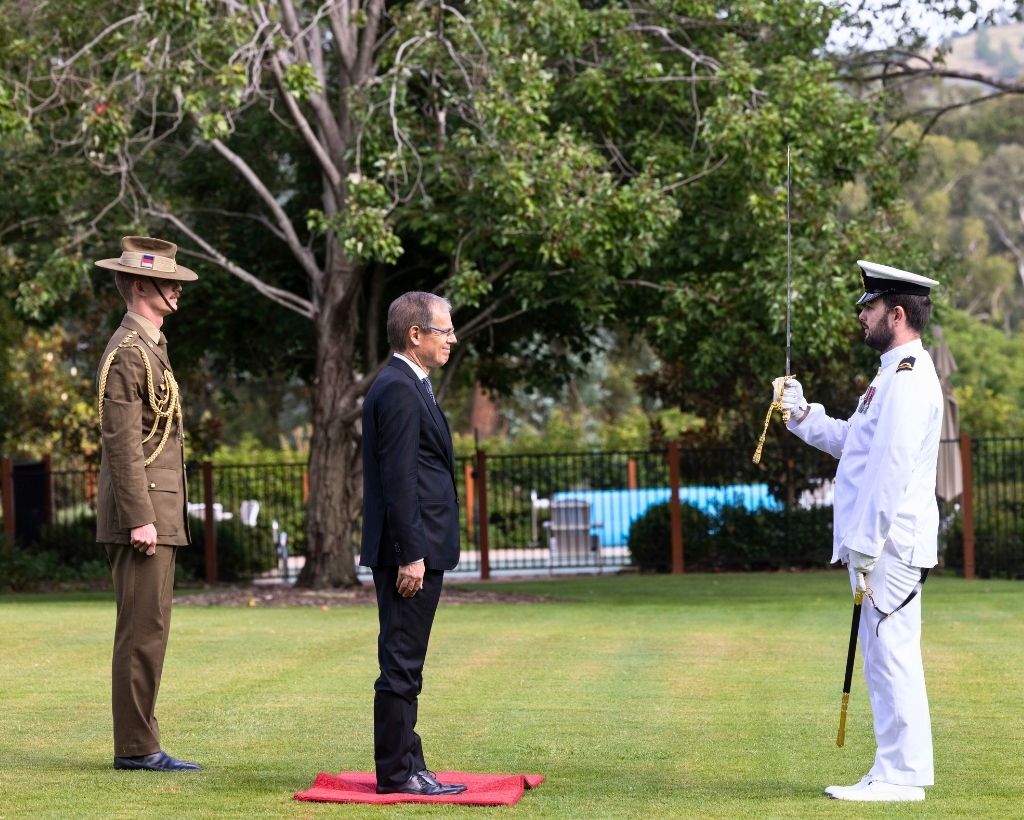
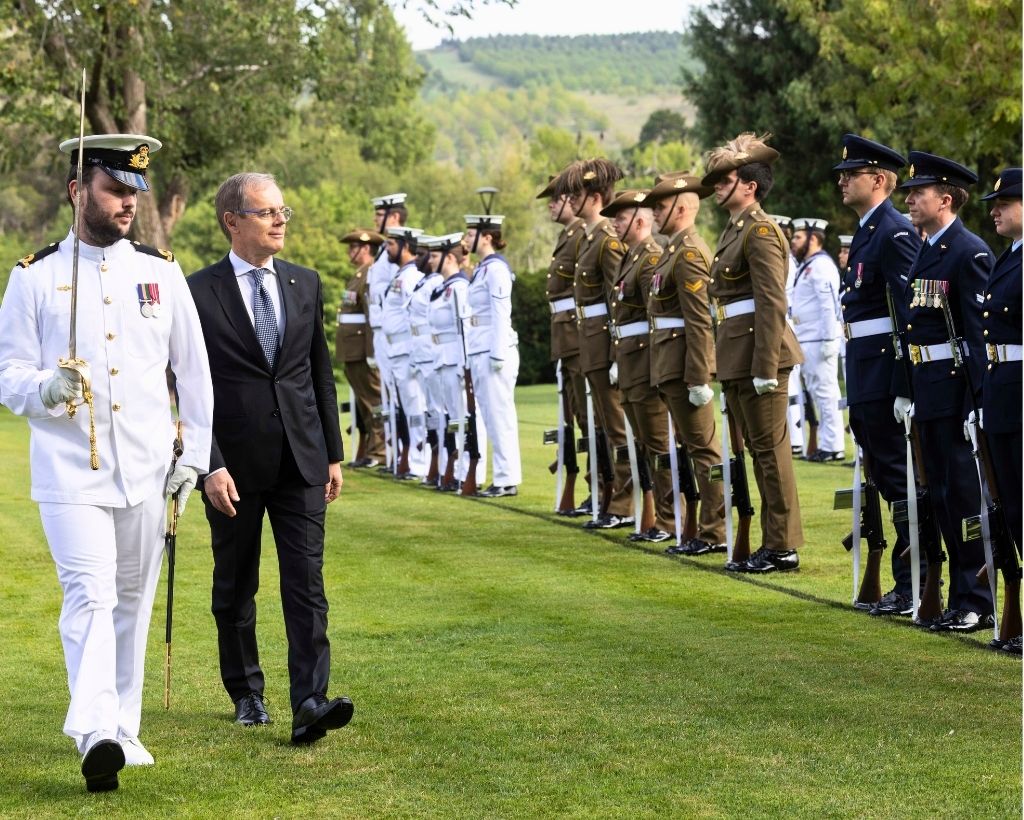
In his first months in Australia, Italy’s new Ambassador to Canberra, Nicola Lener, is already presenting a clear vision for his tenure: to honour the legacy of Italian migration while projecting a contemporary image of Italy as a nation of innovation, research, culture and global relevance.
There is a calm assurance about Nicola Lener, Italy’s new Ambassador to Australia, that comes not only from experience, but from vocation. After more than three decades in diplomacy, he speaks with the measured confidence of someone who has represented Italy across very different worlds, from Latin America to the Middle East, from North Africa to North America. Official biographical material published by the Italian Embassy in Canberra and the Italian government shows that Lener was born in Cagliari in 1968, graduated in law at the University of Cagliari, joined the diplomatic service in 1993, and most recently served in roles linked to rule-of-law diplomacy and Italy’s international institutional work before arriving in Australia in January 2026.
In his conversation with Segmento, Ambassador Lener described a career shaped by both institutional responsibility and a strong personal sense of duty. Over 30 years, his postings have included Peru, Jordan, Morocco, Canada and the United Arab Emirates, as well as key appointments in Rome. Those roles ranged from business internationalisation and visa policy to high-level coordination for Italy’s G7 presidency preparations and work promoting Italy’s anti-corruption and anti-organised crime expertise abroad. His official biography also notes his role as Ambassador to the United Arab Emirates and his later work as Coordinator for Rule of Law Diplomacy at the Ministry of Foreign Affairs and International Cooperation.
That breadth of experience matters in Australia, a country he says he is still discovering, two months into the posting, but already reading with interest and empathy. One of the first parallels he draws is with Canada, another country where he served and where multiculturalism is central to national identity. Australia, like Canada, is a place in which immigrant communities have not simply settled, but helped shape the national fabric. In that context, he is careful with language. He prefers to speak not just of an Italian community in Australia, but of an Italian-Australian community: a formulation that recognises both heritage and integration, memory and belonging.
That distinction is important. For Lener, Italianità in Australia is not frozen in the era of postwar migration, even if that chapter remains foundational and deserving of lasting gratitude. The community today is layered and evolving. It includes elderly migrants whose needs may increasingly relate to health, assistance and social connection. It includes the children and grandchildren of migration, often seeking to reconnect with language, identity and culture. And it includes newer arrivals — professionals, researchers, academics and entrepreneurs — whose relationship with Italy and Australia is shaped as much by innovation, mobility and international opportunity as by nostalgia.

One of the Ambassador’s clearest priorities is therefore cultural and symbolic as much as economic: to modernise Australia’s image of Italy. The relationship between the two countries is already strong, and the Embassy’s official message underlines the “deep and enduring ties of friendship” between Italy and Australia. But Lener does not believe strong relations should lead to complacency. He wants Australians to see Italy not only through the lens of migration history, food and lifestyle, but also as a country of advanced manufacturing, scientific excellence, design capability and strategic relevance in a rapidly changing world.
That ambition aligns well with areas where Italy is increasingly visible in Australia. In our interview, the Ambassador pointed to the strong presence of Italian researchers in Australian universities and research institutions, active in fields such as artificial intelligence, health sciences, quantum technologies and space. He expressed support for stronger networking among Italian researchers and for initiatives that connect research excellence with entrepreneurial and industrial outcomes.
Trade, education, research and culture all sit high on his agenda. So too does the wider Indo-Pacific context, which has become increasingly important for Italy’s foreign policy outlook. Lener noted the growing Italian interest in the region, particularly in maintaining open trade routes, stable dialogue and stronger international partnerships. Here again, his background is relevant: his previous senior roles have combined diplomacy with economic promotion and strategic coordination, giving him an unusually broad platform from which to further develop the bilateral relationship.
The interview also touched on a subject of immediate importance to many families: citizenship. Lener explained the recent changes to Italian citizenship rules as an attempt to rationalise access and better define the legal link with Italy. Official guidance from the Ministry of Foreign Affairs states that, following the 2025 reform, descendants born abroad are automatically citizens only up to two generations, meaning at least one parent or grandparent must have been born in Italy. The Ministry also confirms that the law reopened, until the end of 2027, the possibility for certain former Italian citizens who lost citizenship under previous rules to reacquire it.
Yet perhaps the most important part of the Ambassador’s message was not procedural, but human. He spoke with genuine appreciation of the role the Italian-Australian community has played in strengthening Italy’s standing in Australia over decades. It was, in many ways, a message of respect: respect for sacrifice, for contribution, for continuity. Institutions matter, but they matter most when they recognise the people who gave substance to the relationship long before the current generation of diplomats arrived.
That may well become the hallmark of Nicola Lener’s tenure in Canberra: a diplomacy that is both contemporary and conscious of legacy. In these early months, he appears determined to build on the affection and trust that already exist between Italy and Australia, while also widening the frame — toward innovation, research, modern industry and a renewed understanding of what Italy represents today.
For the Italian-Australian community, that is an encouraging beginning. For Australia, it may be an invitation to rediscover Italy not only as a country of memory, but as a partner of the present and the future.

