


Around Nonna's table
Turning memory, food and community into a living tradition
From lockdown kitchens to packed community halls, Michelle Colangelo’s Nonna’s Cucina Family shows how food can revive heritage, belonging and intergenerational connection.
In many Italian households, the kitchen has always been more than a place to cook. It is a classroom, an archive, a confessional, a gathering point. For Michelle Colangelo, founder of the thriving Facebook community Nonna’s Cucina Family, it has also become a bridge—between generations, cultures, and a collective longing for connection rediscovered during lockdown.
Michelle grew up in Preston, a suburb in Melbourne’s north, in a family shaped by layered identities. Her grandparents were Irish, yet Italy loomed large in her upbringing. Her grandfather, who spent significant time in Italy, brought home not only stories but language, music and, most enduringly, food. Italian was spoken, Italian songs were played, and Italian dishes appeared on the table alongside Irish traditions. Family life revolved around large gatherings and generous feasts—moments where culture was not explained, but lived.
As a child, Michelle was taught Italian, though she later lost much of the language before starting school—a common experience among children in migrant households where assimilation was often prioritised over bilingualism. What remained was an intuitive understanding of food as heritage, transmitted through hands, gestures and shared meals rather than words.
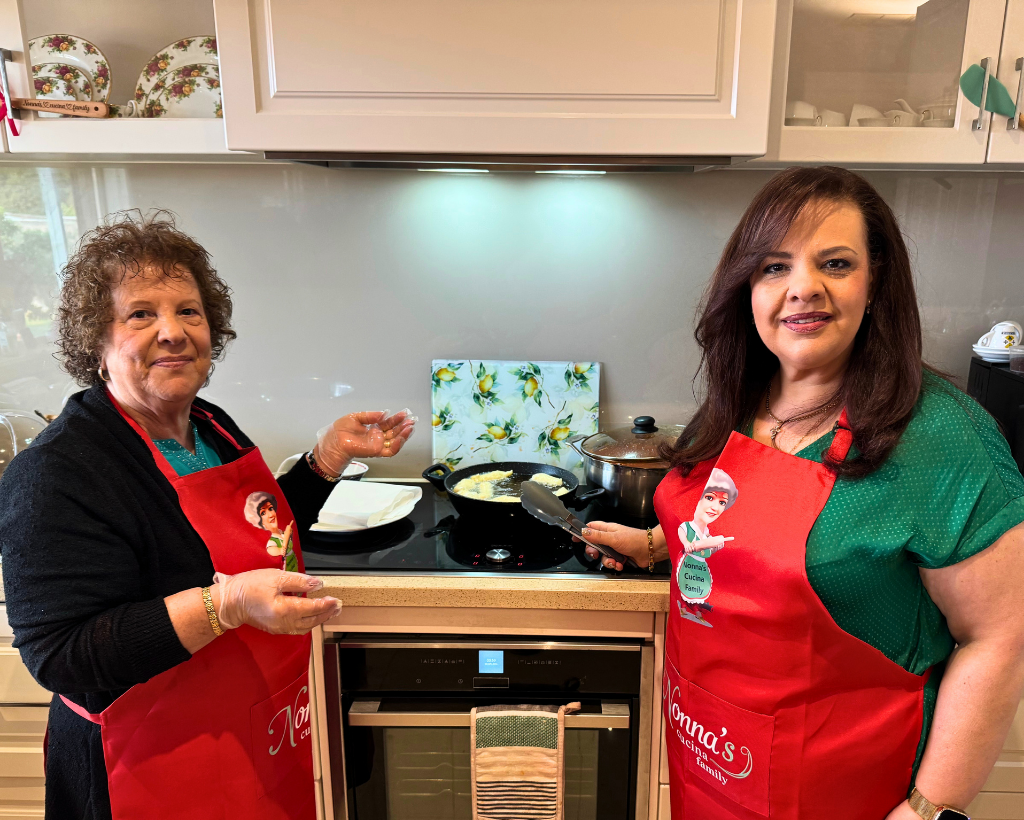
During the long months of pandemic lockdown, these early memories resurfaced with unexpected force. Like many others, Michelle found herself turning inward—and backward—revisiting her grandfather’s recipes and the flavours of her childhood. What began as a personal exercise soon became communal. She started sharing recipes and stories on Facebook, not as an expert, but as someone retracing her steps.
From this impulse, Nonna’s Cucina Family was born, and the name itself speaks volumes. In Italian culture, a nonna is not just a grandmother, but a custodian of knowledge—patient, authoritative, generous. The group was conceived as a space to share not only recipes, but memories, traditions, and the emotional weight carried by food. Friends invited friends, posts were shared, and the group grew organically. Today, Nonna’s Cucina counts over 35,000 members, with a strong Calabrian presence and participants spread across Australia and overseas.
At the heart of this growth is a clear vision and a collaborative leadership. Michelle’s vision in creating this group was for members to honour their own nonna through a shared love of cooking, and celebrating the nonna’s table as a central family space that brings joy and unity. From the very beginning, Isabella Monaco has always been an important and popular presence, helping grow the group into what it is today. Now serving as vice president, she has been a co-administrator and partner in Michelle’s journey from its early days. Although she is not “the Nonna” of the group—as Nonna’s Cucina Family is designed to celebrate every nonna, many of whom are represented on the team—Isabella’s contributions are widely recognised and deeply respected.
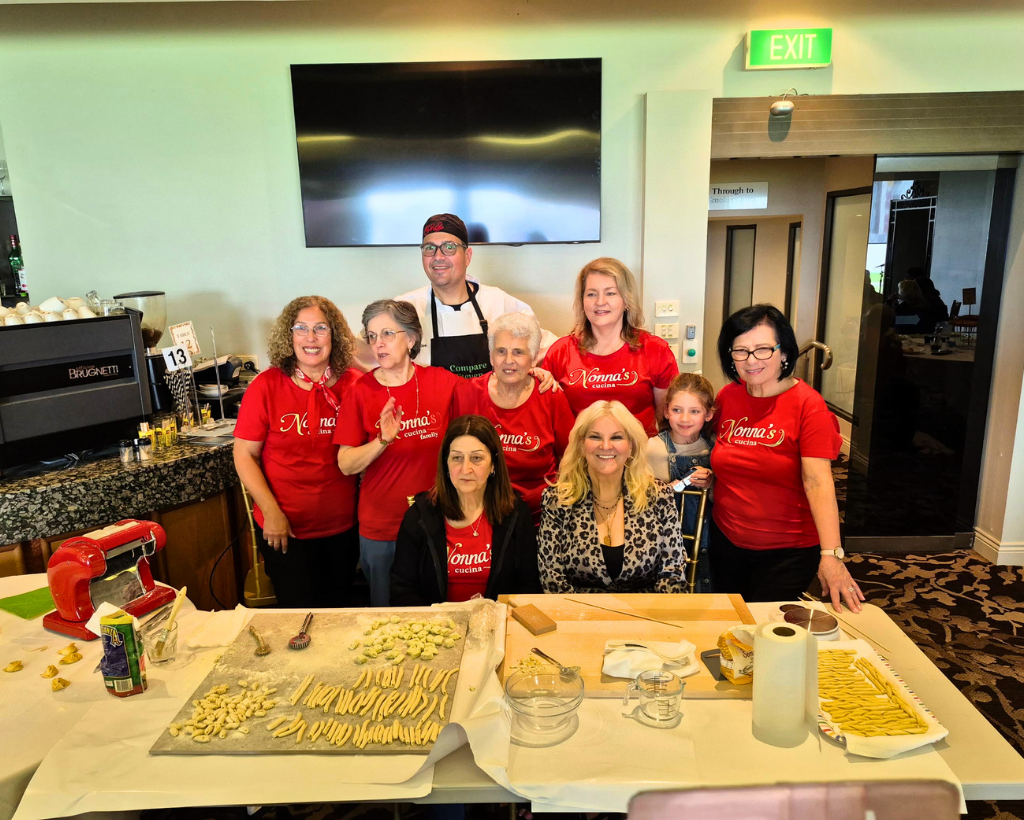
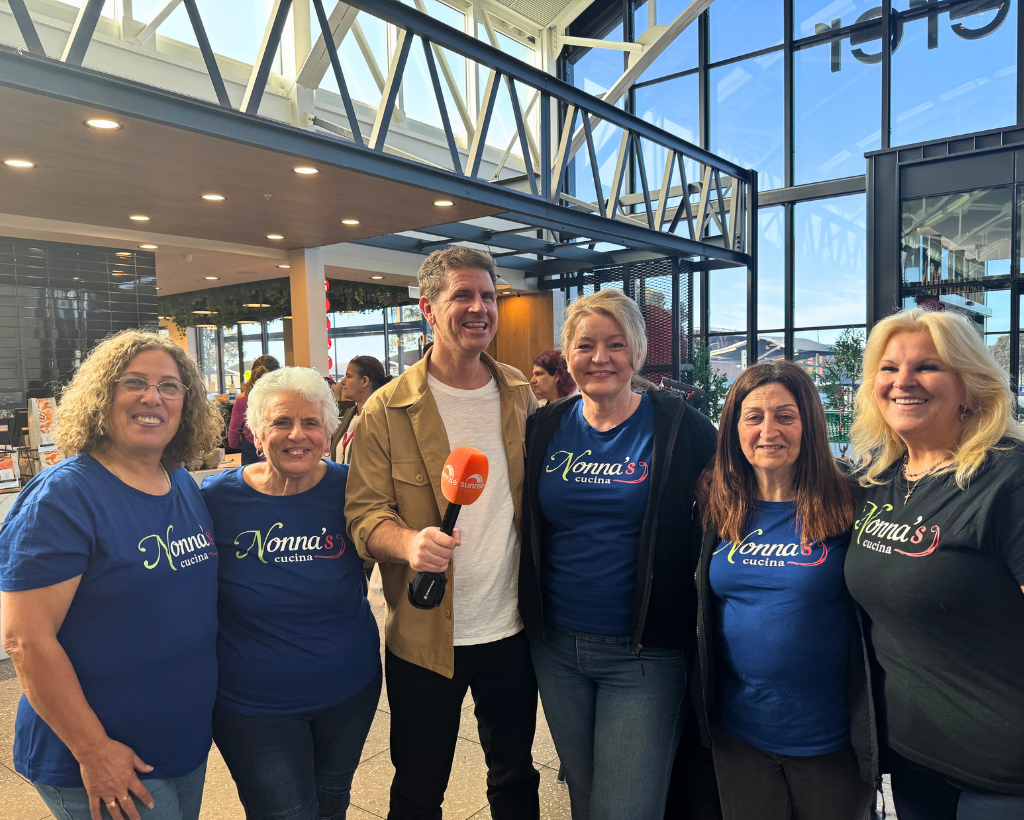
As lockdowns lifted, something else became clear: people wanted to take this sense of belonging beyond the screen. Requests for gatherings turned into winery lunches, dinner dances, and celebratory events that felt less like functions and more like extended family reunions. The annual Nonna’s Cucina Family anniversary, usually held in May, has become a highlight, with the next gala scheduled for 13 June 2026 at the Melrose Reception Centre in the Melbourne suburb of Tullamarine.
These events are unapologetically joyful. There is Italian food, music, dancing, laughter—and often friendly competition, such as cake contests where winners might take home a symbolic prize like a Nonna’s apron. Beneath the festivity, however, lies a deeper purpose. Each year, the group also organises fundraisers, supporting causes such as Make-A-Wish through cake sales and auctions, reinforcing the idea that community is sustained not only by celebration, but by generosity.
What makes Nonna’s Cucina Family particularly resonant is its timing. Michelle observes a clear generational shift within Australia’s migrant communities. Where the children of migrants often sought integration and distance from difference, their children—the grandchildren—are now actively reclaiming their cultural roots. Food has become a gateway.
Michelle notes how often members share similar reflections: resistance in youth, followed by rediscovery in adulthood. Many now find themselves learning alongside their children, conscious of an urgency to capture first-generation stories before they disappear.
In this sense, Nonna’s Cucina Family is not simply a cooking group. It is a living archive of migrant memory, evolving in real time, demonstrating how tradition does not survive by standing still, but by being practiced, shared and reinterpreted.
Food, as Michelle’s journey shows, is never just about nourishment. It is about identity, continuity, and the quiet power of sitting around a table—real or virtual—and recognising yourself in others.

