


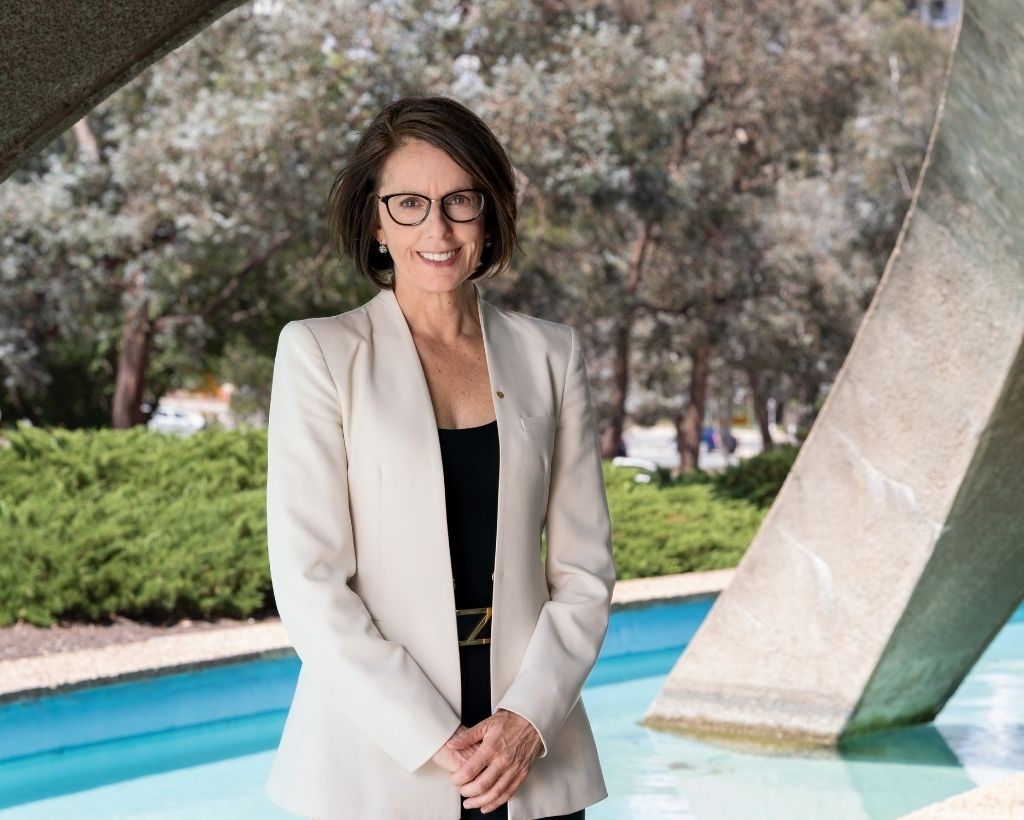
The Wisdom of Two Worlds
Science, heritage and the power of connection
Spanning neuroscience, cultural heritage and national science leadership, Anna-Maria Arabia’s journey illustrates the powerful ways in which scientific thinking and human relationships can shape innovation, inclusion and societal progress.
Science and tradition are often portrayed as opposing forces: one looks forward, the other backward; one challenges established knowledge, the other preserves it. Yet for Anna-Maria Arabia, former Chief Executive of the Australian Academy of Science, the two have never been in conflict. Rather, they are complementary ways of understanding the world and our place within it. Her story offers a compelling example of how cultural identity can shape leadership, influence scientific thinking and create bridges between knowledge systems.
Born into an Italian-Australian family, Anna-Maria grew up with an appreciation for relationships, community and cultural heritage. While her professional life would ultimately be dedicated to science, she never viewed knowledge as something detached from people or culture.
“Science is not just a collection of facts,” she explains. “It’s a way of thinking and it ought to be deeply linked to societal contexts.” That perspective became a defining feature of her career.
Arabia began her career as a neuroscientist, driven by a desire to understand how the human brain works. Yet she soon recognised that her greatest strengths lay beyond the laboratory bench.
While conducting research, she found herself increasingly drawn to connecting people, organising initiatives and creating opportunities for collaboration. She spent much of her spare time coordinating medical research advocacy efforts in Victoria and building links between researchers and institutions across the world.
“I realised early on that I enjoyed bringing people and resources together,” she recalls.
That realisation led her to make a bold career move. In 2003 she applied for a policy role with the Australian Government’s Department of Health and Ageing in Canberra where she began a remarkable journey through public policy, government and national leadership.
At the time, Canberra’s public service environment was far less diverse than it is today. Arabia remembers being perceived as something of an outsider because of her academic background and her Italian heritage. Yet those differences became strengths.
Her cultural background helped shape an approach centred on relationships, trust and human connection. These qualities would later prove invaluable when working across government, academia and internationally.
Science also provided her with a unique professional toolkit. Working as a social policy advisor to then Opposition Leader the Hon. Kim Beazley AC, Anna-Maria was responsible for an enormous portfolio spanning health, education, social services, justice, multicultural affairs, and numerous other policy areas. Scientific training taught her how to enter unfamiliar territory, identify evidence gaps and develop solutions.
“Scientific training teaches you how to dive deeply into a problem and to find solutions,” she says.
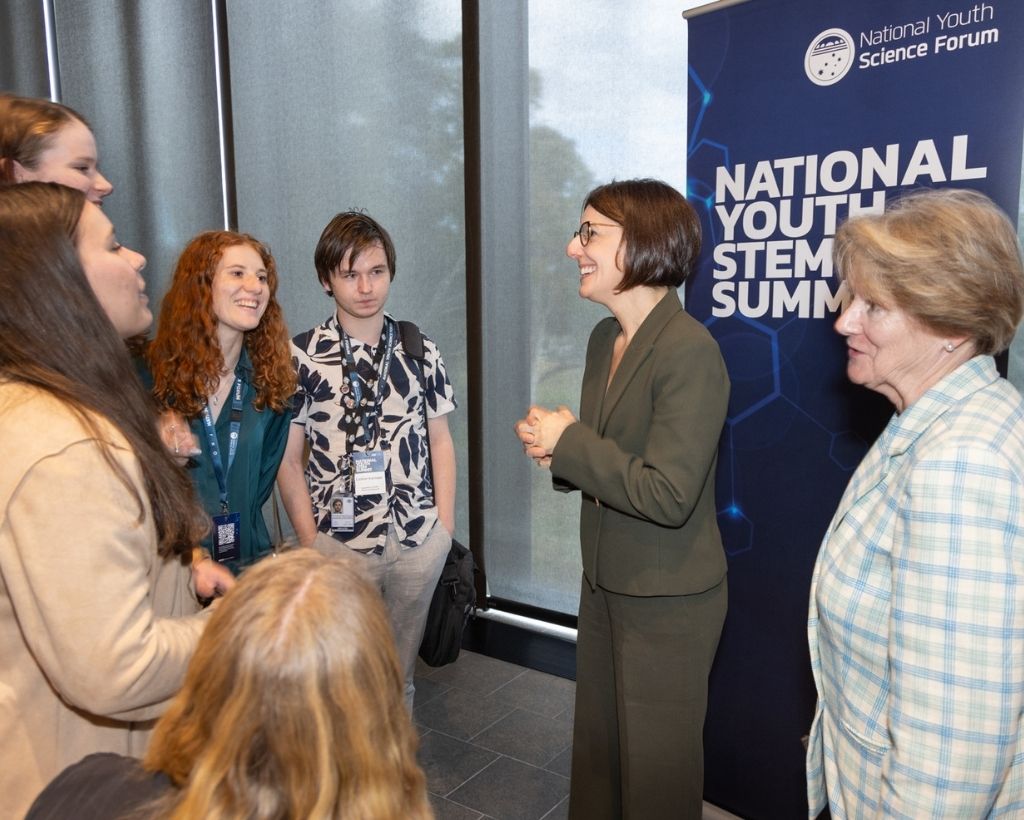
Her exposure to a multitude of portfolios often allowed her to identify connections that others missed. Solutions developed in one policy area could sometimes be adapted to address challenges in another. Rigorous scientific thinking became less about laboratories and more about understanding complexity.
Her career later expanded into infrastructure policy and national science strategy, including advising the then Infrastructure Minister The Hon. Anthony Albanese, and former leader of opposition, The Hon. Bill Shorten. Throughout these experiences, she became increasingly convinced that science was not merely a specialised discipline but an essential framework for effective decision-making.
In 2016 Arabia became Chief Executive of the Australian Academy of Science, one of the nation’s most respected scientific institutions. Over the next decade she would lead the Academy through some of the most challenging and transformative periods in recent history.
One of her most significant achievements emerged during the COVID-19 pandemic. Working alongside Australia’s Chief Scientist, Dr Alan Finkel AC, Arabia helped establish the Rapid Research Information Forum (RRIF), the initiative provides government ministers with rapid access to expert scientific advice when they needed it most.
Rather than waiting months for traditional review processes, ministers could receive informed reports within days. During a global crisis characterised by uncertainty and misinformation, the RRIF demonstrated the value of trusted scientific institutions working collaboratively and efficiently.
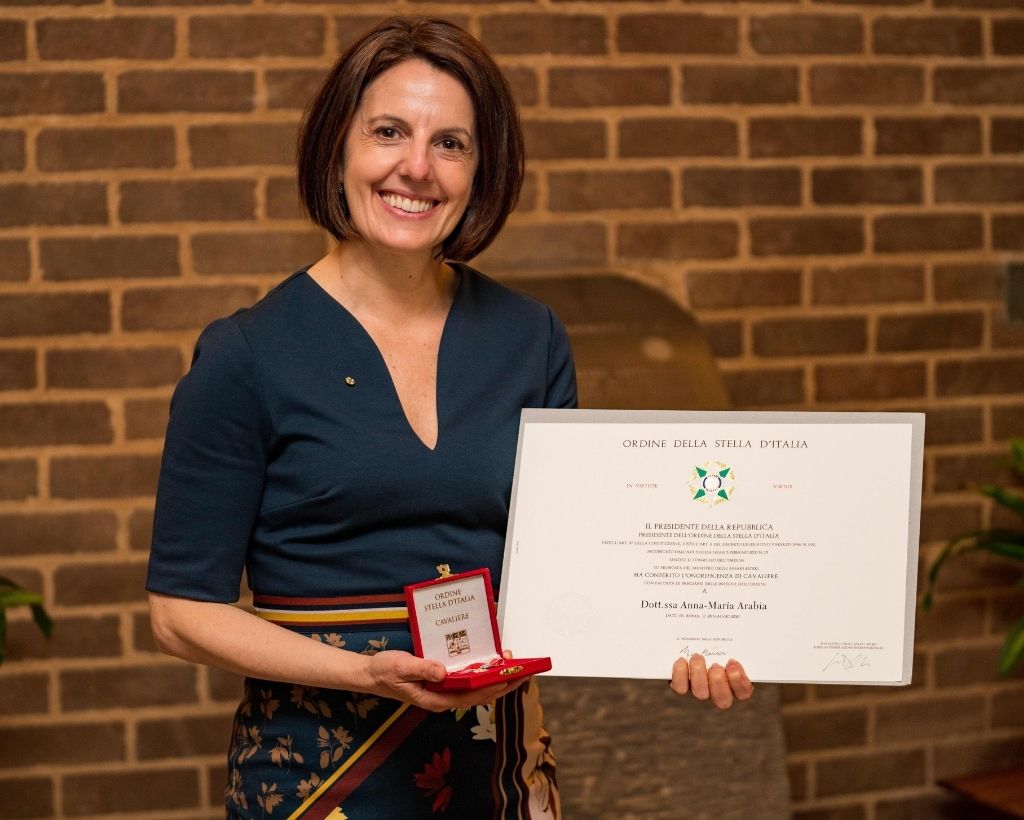
Yet perhaps one of Arabia’s most enduring legacies lies beyond Australia’s borders. In October 2024, the Pacific Academy of Sciences was launched, giving Pacific Island nations greater agency and input into decisions about their future. For Arabia, this initiative represented something much larger than institutional development. It was about recognising that knowledge comes in many forms and that communities must be empowered to shape their own destinies.
Her experience working with First Nations communities across Australia and the Pacific reinforced a lesson she had learned from her own heritage: traditions are not obstacles to progress. They are repositories of wisdom, identity and resilience. Scientific knowledge and traditional knowledge can work together. Both seek understanding. Both seek solutions. The challenge is creating spaces where they can genuinely inform one another.
Today, having completed her tenure at the Academy, Arabia has established Scientia Advisory, a consultancy focused on accelerating the adoption of artificial intelligence (AI) across Australia’s research ecosystem. She believes Australia faces an urgent challenge. While AI is transforming scientific discovery around the world, the nation risks falling behind global competitors if it does not invest strategically in new technologies.
Yet even in discussing artificial intelligence, her perspective remains deeply human. Technology, she argues, should serve society, not the other way around. Whether advancing drug discovery, improving patients’ health or addressing climate change, innovation must remain connected to people, communities and values. It is a philosophy that reflects both scientific rigour and cultural wisdom.
Throughout Anna-Maria Arabia’s career, science and tradition have gone hand-in-hand. One provides the tools to navigate the future; the other provides the values that guide us there.
When heritage inspires innovation, progress becomes not only possible, but also meaningful.

