


The Art and Science of Sensation
How Cantine Zagarella turns wine into a lasting memory
Cantine Zagarella is redefining Calabrian winemaking through sensory experience, artisanal philosophy, organic viticulture, and innovative technology, creating wines deeply connected to territory, family, and identity.
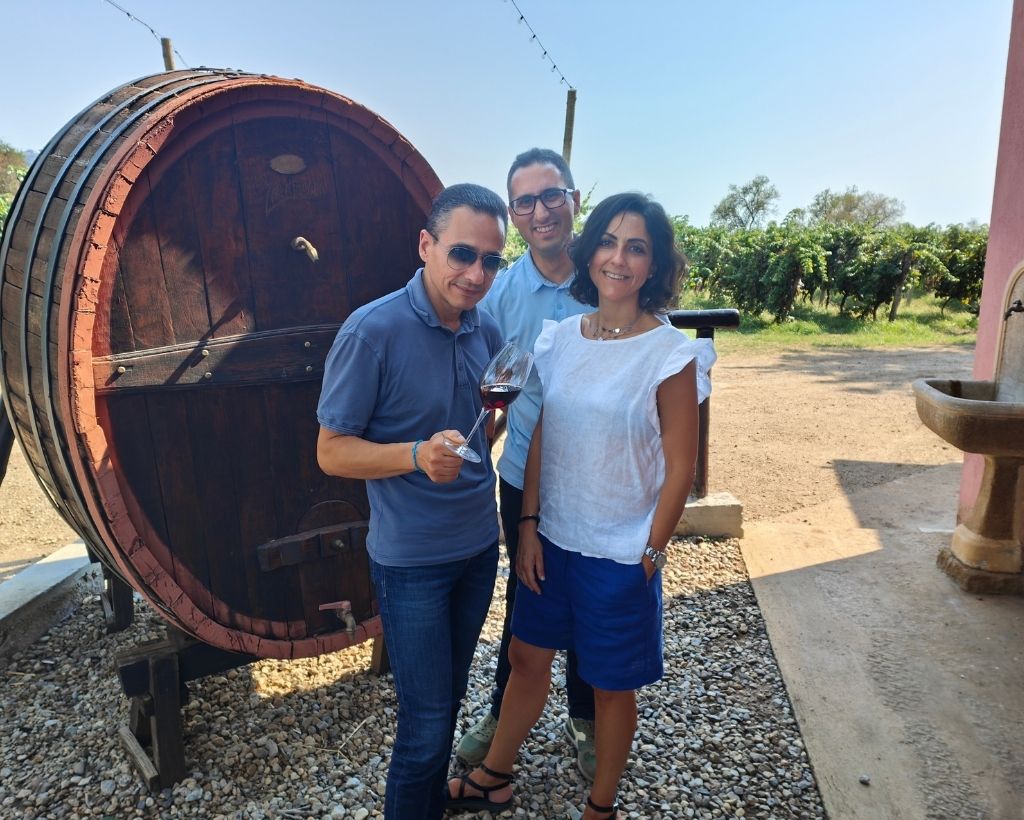
For Giovanni and Maricle Zagarella, the most important measure of a wine is not what happens in the glass, but what remains in the memory afterwards. During an extended conversation at Cantine Zagarella, this idea surfaced repeatedly, shaping discussions about vineyard management, fermentation techniques, packaging design, and even the family's historic connection to bergamot perfumery.
Memory has become central to the identity of the Calabrian winery overlooking the Strait of Messina from the hills above Gallico near Reggio Calabria. While deeply rooted in agriculture, Cantine Zagarella has developed a distinctive approach that seeks to unite craftmanship, place, and human perception within every bottle.
Their story stretches back centuries, with family agricultural roots tracing as far as the 1700s. Over generations, the family worked across multiple sectors, including wine, olive oil, and, most uniquely, perfumery extraction linked to bergamot cultivation—one of Calabria’s most iconic aromatic treasures.
That perfumery heritage would eventually help shape the winery’s modern identity, informing a broader rethinking of how wine could engage the senses beyond taste alone. Around thirty years ago, Giovanni began a major restructuring of the company, guided by a simple question: why should a consumer choose one label over another in an increasingly crowded market?
The answer, according to the Zagarellas, could not rest on technical quality. They believed the decisive factor would be the ability to create a lasting impression.
“Wine, like music and art, is emotion,” explained Giovanni.
This philosophy permeates every aspect of the winery’s work, from vineyard management to packaging. Even the label is considered part of the sensory journey—the first story told before the wine is opened. Visual cues, aromatic expression, texture, structure, and retro-nasal persistence form a single sensory narrative designed to align expectation with experience.
Their approach also reveals a poetic understanding of perception. Giovanni described how certain aromas can anchor moments in memory much like music does. Perhaps unsurprisingly, the family’s background in perfumery strongly shaped this outlook. The same principles once used to maximise aromatic extraction in bergamot oils now influence their winemaking approach, with particular attention given to preserving and extending aromatic expression in the glass.
Yet despite this artistic dimension, Cantine Zagarella remains firmly grounded in agriculture. The family estimates that nearly seventy percent of its work and attention is devoted directly to the vineyard. Organic farming is not treated as a marketing trend but as a personal commitment tied to family wellbeing and environmental responsibility.
The vineyards are cultivated organically and certified accordingly, motivated in part by the simple desire for children and family members to walk safely among the vines without exposure to harmful chemicals.
Even seemingly minor technical decisions reflect this approach. Giovanni explained how the winery deliberately uses non-toxic elastic alloy wires rather than thinner stainless-steel alternatives that may eventually become engulfed by the growing vine.
The vineyards overlook one of southern Italy’s most distinctive landscapes: the Strait of Messina, with Mount Etna visible in the distance. Clay-rich soils retain and gradually release water, while winds from north and south combine with marine influences and volcanic elements carried from Etna’s ash-rich environment. The result is a vineyard ecosystem shaped by a complex interaction of geology, climate, and geography.
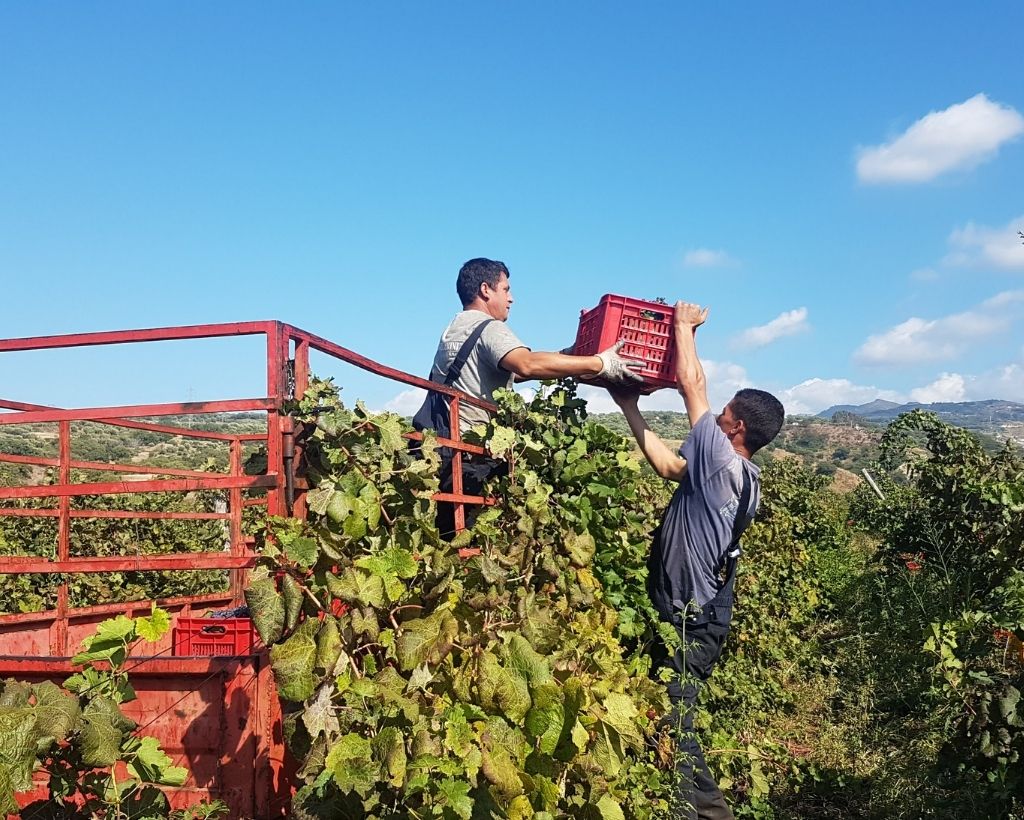
Harvesting remains entirely manual, with small crates used to prevent grapes from crushing under their own weight. The crates are meticulously cleaned, and the fruit is handled with exceptional care to minimise berry damage before vinification begins.
Inside the cellar, the winery combines artisanal sensitivity with advanced technology.
Central to this process is the Ganimede vinification system, an innovative fermentation method that manages cap movement and extraction through the natural dynamics of carbon dioxide pressure rather than aggressive mechanical intervention. Its cylindrical structure and internal funnel allow fermentation gases to circulate and remix the must naturally, reducing oxidation while preserving grape integrity.

For the Zagarellas, the objective is not technological novelty for its own sake, but the preservation of delicacy and aromatic purity. Slow piston-style pumps replace harsher impeller systems, helping keep grapes as intact as possible throughout the process. This allows for longer skin contact at lower temperatures, increasing aromatic extraction while maintaining balance and elegance.
This pursuit of harmony extends to the wine’s consumption. Giovanni repeatedly returned to the concept of “drinkability”—the idea that great wine should leave a positive impression. In their view, quality is measured not only by complexity, but by how naturally and comfortably a wine accompanies human experience.
Today, wine represents Zagarella’s primary focus, although they are also gradually relaunching olive oil production using local autochthonous cultivars such as Carolea. Their olive groves in Sant’Eufemia d’Aspromonte remain substantial, alongside woodland used to produce untreated vineyard stakes internally, reducing reliance on industrial materials that could introduce contaminants.
Perhaps the most important dimension of Cantine Zagarella, however, is its broader social vision.
Throughout the conversation, Giovanni and Maricle repeatedly emphasised the importance of rete—networks of collaboration among local producers. In a region often marked by fragmentation and distrust, they see cooperation as essential to Calabria’s long-term sustainability.
This vision extends beyond commerce. The winery is exploring territorial projects involving neighbouring landowners and initiatives linked to prison rehabilitation through viticulture programmes.
Cantine Zagarella appears less interested in becoming an industrial wine brand than in preserving an ecosystem—cultural, agricultural, human, and social.
If the ambition of Cantine Zagarella is to bottle emotion, it lies not in spectacle or novelty, but in creating wines that carry a sense of place. Their wines seek not merely to impress the palate, but to leave a lasting impression—quietly and persistently—long after the final sip.

