



The Grace of Belonging
Vivienne Nguyen and the work of Multicultural Trust
From child refugee to Victorian multicultural leader, Vivienne Nguyen’s journey reveals how resilience, education and storytelling can protect the fragile promise of belonging.
Viv Nguyen understands the meaning of future because, as a child, she was asked to leave everything familiar in order to find one.
She arrived in Australia from Vietnam just before the end of the war, aged ten and a half, after a journey no child should have to make. Her father, who had worked for the losing side and would later be imprisoned, made a decision that shaped the lives of his children. They had to leave, he told them, because they needed a future.
Viv resisted at first. The sea frightened her. So did the thought of sharks. But there was little choice: historical events rarely ask children whether they are ready. After a year in a refugee camp, she arrived in Melbourne with four older siblings. Her parents and younger sister remained behind.
The first chapters of her Australian life unfolded in places familiar to many migrant families: the Midway Hostel in Maribyrnong, then a modest three-bedroom flat in Brunswick West, school at Brunswick High, the local Vietnamese Catholic church, and the daily challenge of learning a new language, a new city and a new way of life.
There was racism, she recalls, but there was also kindness. Good ESL teachers mattered. So did community and faith. Those early experiences of survival shaped her understanding that belonging is never automatic. It must be built, protected and renewed by people and institutions willing to help.
Her father’s instruction remained clear: education was the pathway forward.
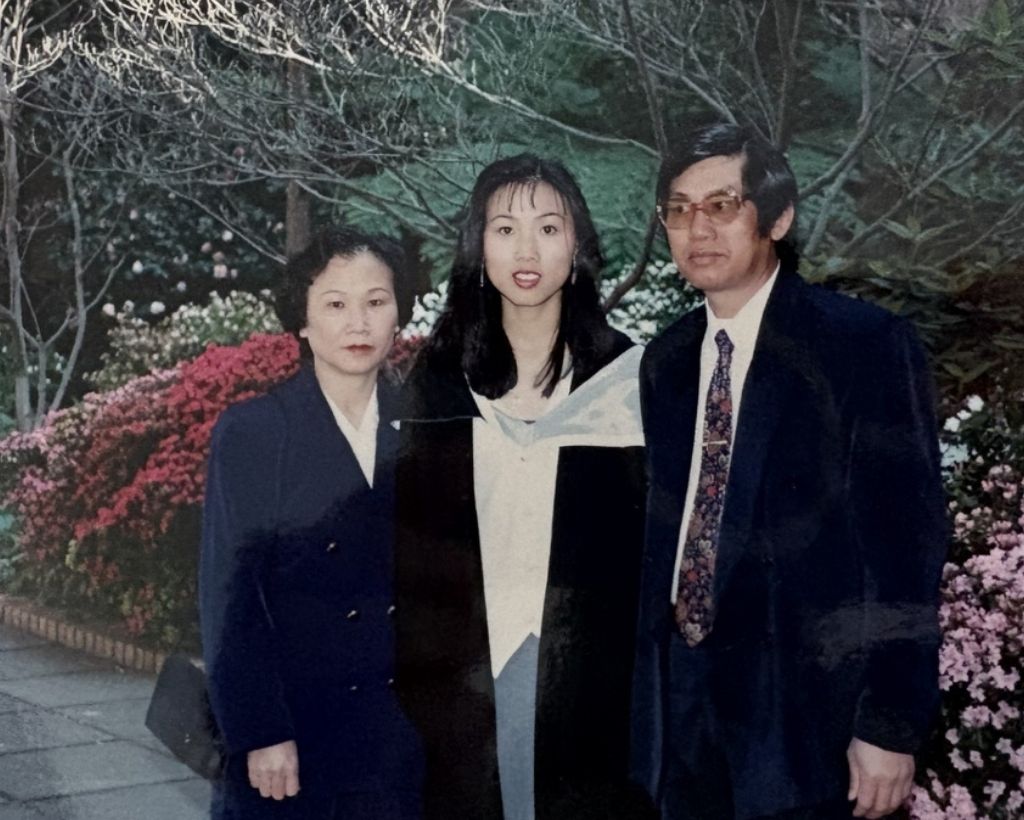
Viv studied Commerce at the University of Melbourne, graduating in 1992 into the uncertainty of a national recession. She built her early career in financial services and banking, including many years at ANZ, where she worked across business development, risk and organisational development.
Then life took her in a different direction. In 2012, when her second son, Fraser, was diagnosed with autism, Viv left the corporate world to better understand the emerging National Disability Insurance Scheme. That personal turning point led her into the community and public-sector work, including roles with Melbourne City Mission and the Victorian Government’s NDIS team.
It was a transition from systems of finance to systems of care.
In 2019, Viv was appointed Chairperson of the Victorian Multicultural Commission, and was later reappointed for a second term. The role placed her at the centre of one of Australia’s most important civic conversations: how a diverse society remains cohesive, fair and confident in itself?
For Viv, multiculturalism is practical work. It requires listening to communities, building relationships and that people have a voice in the institutions that affect their lives. Her leadership has embraced not only established migrant communities, such as Italians and Greeks, but also newer and less visible communities seeking recognition support.
This is where her own story becomes most powerful. Viv knows what it means to arrive somewhere without knowing the language, the systems or whether you will be accepted. They need pathways to belonging: institutions that listen to stories that help others understand who they are.
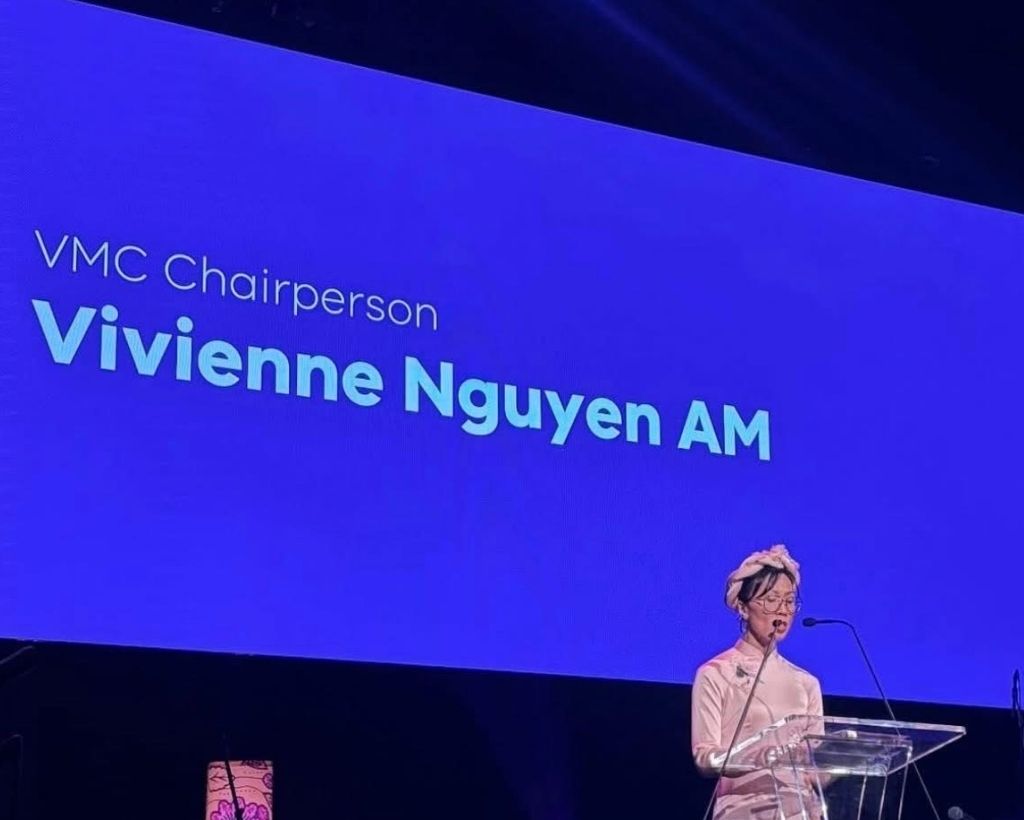
She believes storytelling is an important tool for civic education. When speaking to school children about refugee journeys, Viv does not begin with policy. She begins with lived experience: the fear, the boat, the uncertainty, the child’s imagination trying to understand danger. In those moments, multiculturalism is less about statistics and more about being human.
At the end of her second mandate as Chair, Viv’s is conscious that multiculturalism is at a delicate crossroads. Australia continues to have strong support for a diverse society, yet recent polling suggests that support can no longer be taken for granted. Economic pressure, global conflict, housing stress and increasingly hostile rhetoric about migration are testing public confidence.
Viv sees the challenge clearly. The future of multiculturalism, she argues, depends on three urgent tasks: stronger civic education, a clearer understanding of national values, and a greater willingness to accommodate cultural differences without treating them as threats.
For the Italian-Australian community, this is a familiar lesson. Earlier generations also experienced prejudice, suspicion and exclusion before becoming central to the nation’s story. The danger is forgetting that every established community was once new and their identity contested.
Viv’s life makes that transformation tangible. Multiculturalism is not only about food, festivals and celebration—although these matter—it is about dignity and participation. It is about how a child who arrives in Australia with fear can grow into a woman who contributes to public life through education, opportunity and community support.
As she prepares to pause, recalibrate and spend time with family, Viv leaves behind a legacy of steady leadership. She has helped make Multicultural Victoria more visible, more connected, and more focused on the work still ahead.
She arrived as a child needing a future. She leaves public life having helped shape one. That is perhaps the most graceful definition of belonging.

