


Transforming Grief into Beauty
Anna Trombelli Acquaro: Poetry, memory, and Calabrian identity
Segmento met with Anna Trombelli Acquaro, a Calabrian-born poet and writer whose life and work trace a bridge between postwar Calabria and multicultural Australia, shaped by memory, dignity, and resilience.
Poetry, for Anna Acquaro, was never an abstraction. It emerged early, almost instinctively from the sights, sounds, and silences of postwar Calabria. She was just eight years old when she won her first poetry prize, inspired by everyday scenes in her hometown of Bianco, on the Ionian coast. One image in particular stayed with her: village women, dressed in black, walking slowly toward church. In her child’s imagination, they became butterflies, dark, solemn, yet strangely light, carrying grief and grace at once. That vision became the focus of her first poem and, in many ways, a quiet template for the work that would follow: an attention to ordinary lives, to endurance shaped by loss, and to the possibility of transformation even within constraint. From that moment, words became Anna’s way of seeing of holding still what might otherwise pass unnoticed.
At just eight years of age, the poem earned recognition from a library in Reggio Calabria and Anna was awarded a small floral ceramic sculpture, an object Anna has kept ever since. More than a childhood trophy, it remains a tangible link to a formative time when poetry arose naturally from lived experience. Even then, her verses carried an unusual maturity, attentive to the dignity of people navigating poverty, scarcity, and the collective effort required to survive the aftermath of war. Postwar life, with all its hardships and solidarities, would remain a central thread in her writing for decades.
Anna’s family history reflects the complexity of Italian identity itself. Her father, an engineer originally from Mantua, travelled to Calabria for work, where he met and married Anna’s mother. Despite her father’s northern origins, the family’s roots, daily life, and emotional belonging were firmly anchored in Calabria. Anna speaks with unmistakable pride of her Calabrian identity, shaped by language, customs, and the close-knit fabric of village life. Belonging, for her, was never simply geographic; it was communal.
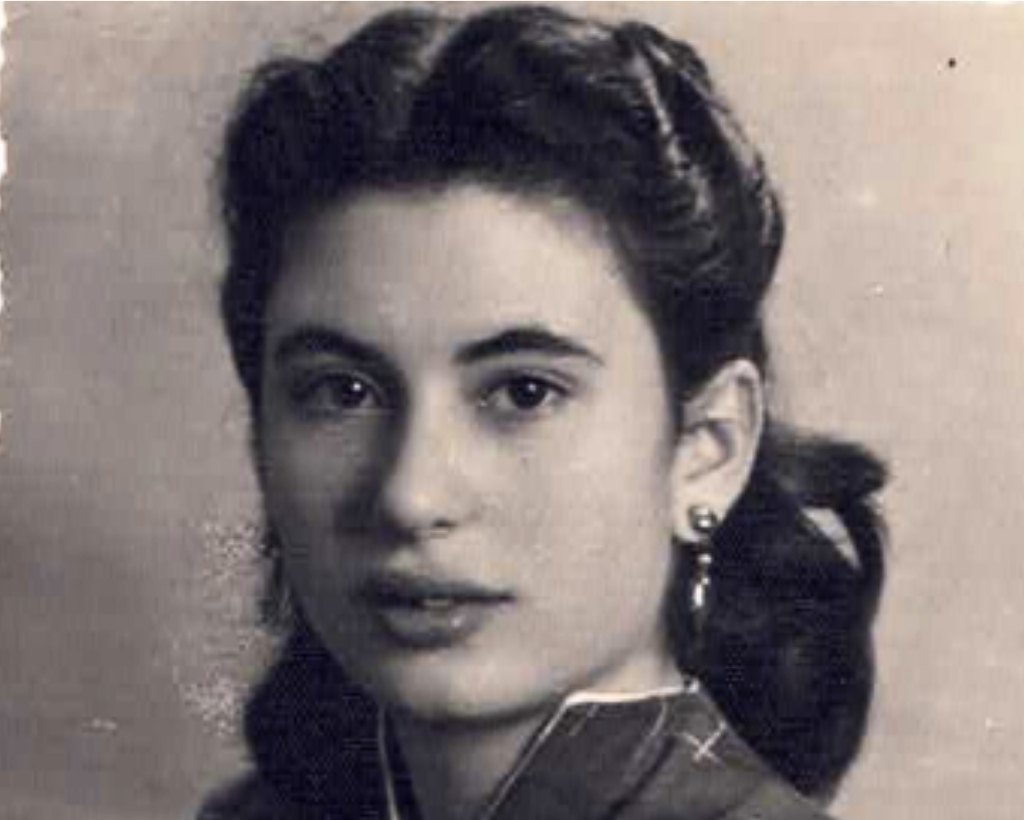
That sense of community was forged in difficult times. Like many families, Anna grew up amid the terror of the Second World War and its long aftermath. When Anna was just ten years old, her father died unexpectedly in a tragic accident, a loss that deeply marked the family and altered the course of her childhood. Survival depended not on individualism, but on mutual support. Doors were left open, food was shared, and neighbours became extended family. These experiences, Anna reflects, instilled values that feel increasingly rare today: generosity without expectation, hospitality without formality, and resilience born of necessity rather than choice.
In 1958, hardship once again brought about change. At just seventeen, Anna and her sister travelled to Australia to assist their older brother, who had been seriously injured in a workplace accident. Believing their stay would last only a year or so, just long enough for him to recover, they took up factory work, a reality shared by many migrant women of her generation.
That experience of responsibility and care did not remain confined to family. In the unfamiliar rhythms of factory life, Anna’s instinct for attentiveness and connection surfaced once more. When a pregnant co-worker struggled, Anna stepped in to help.
That simple act of kindness quietly altered the course of Anna’s life. What began as care for another led her to become the child’s godmother, alongside a young man named Alfredo, the chosen godfather. In a moment shaped as much by circumstance as by destiny, she encountered the man she would later marry.
Their courtship was brief but intense, shaped by shared values and reinforced by strong family networks. They married in 1960, a union marked by deep love, mutual respect, and enduring admiration, qualities that formed a strong foundation for a loving family and a full life shared together.
Reflecting on those early years, Anna often contrasts Calabrian hospitality with what she initially encountered in Australia. In Calabria, welcoming others was instinctive and expansive; in Australia, it felt more reserved, more cautious. Over time, however, she saw how migrant communities reshaped the social landscape, bringing with them a strong sense of community, cultural continuity, and a deeply held work ethic that enriched Australian society itself.

For many years, writing remained in the background of Anna’s life, quietly giving way to the responsibilities of work and family. It was only later, after rediscovering her childhood prize, that poetry returned with renewed force. Memories resurfaced not as nostalgia, but as a living archive demanding expression. Anna began to write again, drawing deeply on Calabria: the sea, nature, the rhythms of village life, family bonds, and the emotional toll of migration. What is notable in her writing is the way she uses language to find beauty in the ordinary; the melody of a wave breaking on the shore, a bird’s morning song, the quiet certainty of the sun rising, an attentive, creative use of language that has become the hallmark of her style.
This renewed creative phase proved prolific. Anna published several books of poetry and children’s stories, earning awards and recognition from cultural institutions in Italy, Switzerland, and Germany. From the 1990s to the early 2000s, she was actively involved in the ALIAS (Accademia Letteraria Italo-Australiana) literary group, participating in readings, events, and award ceremonies, including in Palermo. These gatherings were not merely literary, they were spaces of shared memory, where migrant writers articulated a collective voice shaped by displacement and belonging.
In conversation, Anna reflects with clarity on the changes she has witnessed across generations. Families today, she notes, are structured differently; communities are often less interdependent than they once were. Yet she resists judgment, instead reflecting on the enduring importance of the values migrants carried with them, values that helped build supportive, resilient communities grounded in shared responsibility. Letting go of old grievances within families, she believes, is essential for peace of mind, an insight shaped by a lifetime of observation, loss, and endurance.
The eventual closure of the ALIAS group, following the loss of key members, marked the end of an era. Still, the cultural bridge between Calabria and Australia remains alive, sustained by people like Anna and by ongoing initiatives that celebrate shared heritage. These efforts affirm that migration is not an erasure, but an expansion of identity.
Anna Acquaro’s story honours the quiet strength of ordinary lives. From a young girl in Bianco transforming grief into beauty, to a poet who gives voice to migration and memory, her writing affirms the power of storytelling to transform and to heal. In her poetry, her Calabrian heritage lives on, not as nostalgia, but as a source of meaning that continues to shape lives across time and place.

