


Florence from centre to the peripheries
Our travel writer and curious flâneuse shares vignettes documenting her walks into Florence's neighbourhoods during her three-month stint in the city.
Five bridges west of the Ponte Vecchio, cars skimmed over at residential speed—unlike the preceding bridges where pedestrians to-and-froed between the city centre and Oltrarno. The shift in velocity and the rumbling drone of engines felt like markers, tracing the edge of Florence’s historical centre into suburbia. I followed the cars in their wake, veering onto the footpath that shadowed the bank of the Arno, venturing toward the neighbourhoods.
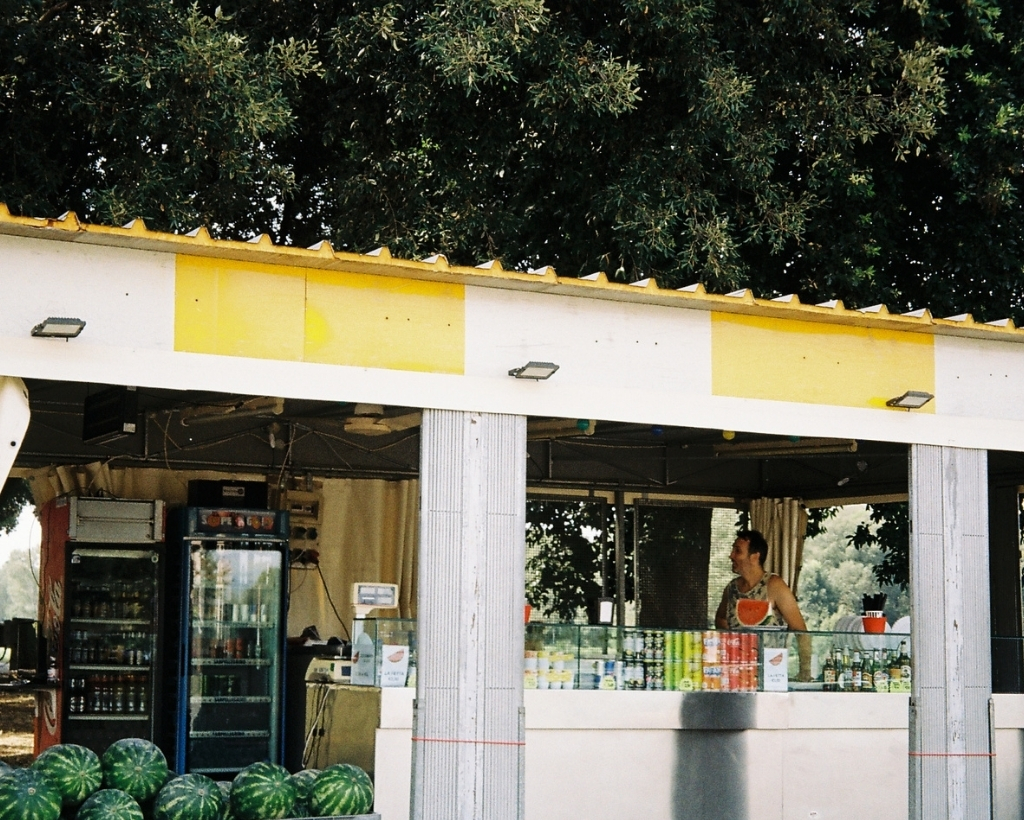
There wasn’t a person in sight, though a lost hair tie and graffitied fences reassured me that other people had walked this same path. Continuing on, a yellow and white-striped shack increasingly grew into view, as did crates brimming with a season’s worth of cocomeri (watermelons).
A man in a spotted singlet paused, lifted his eyes—and knife—in mid-slice. “You’re in Isolotto,” he said, sensing I was misplaced, “and this is a cocomeria.” The Italian language, instinctual, transforms eating a particular food, like gelato, into a designated place to eat it—gelateria—by tacking on ‘ia.’ At the cocomeria, kids stood around, mouths gaped as they bit into wedges larger than their mouths.
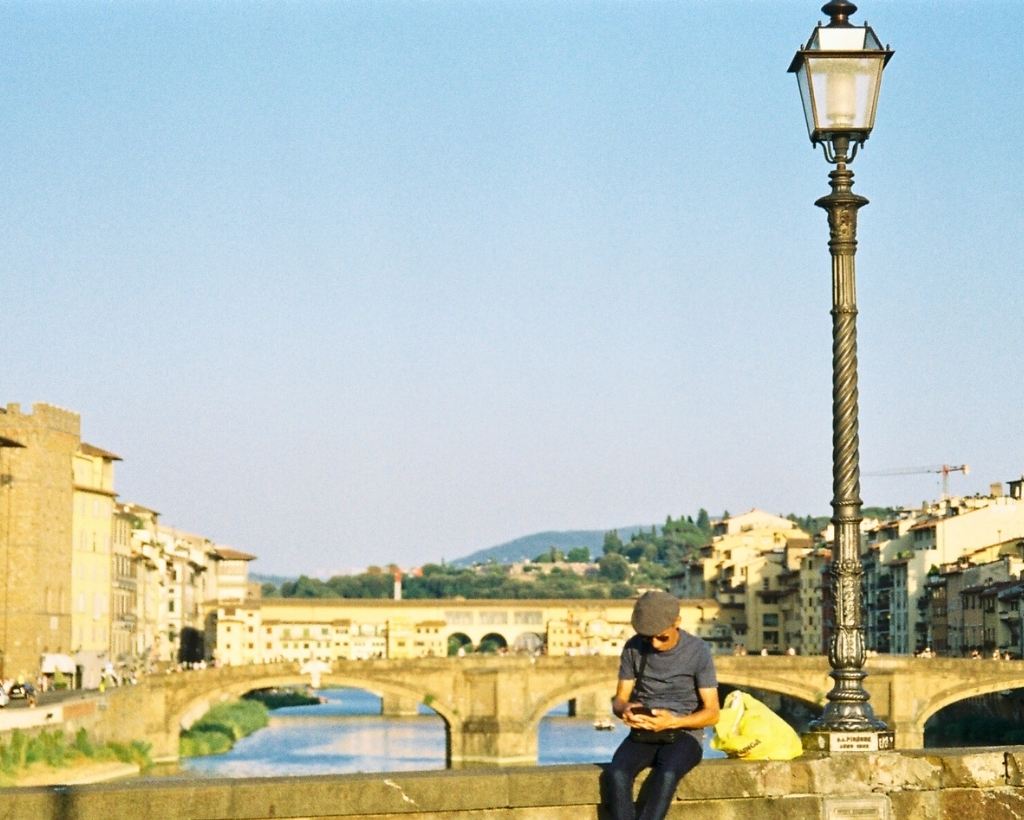
Three kilometres east, the city centre swelled with elbow-bent and neck-craned tourists, absorbing the grandeur of Brunelleschi's dome—among other Renaissance masterpieces—through the lens of their phones instead of their own. In pursuit of completing travel checklists, the touristic experience, operating on movement of place, becomes quantifiable. I don’t claim self-righteousness, for I had the privilege of time, granting me the opportunity to get acquainted with Florence by exploration, rather than an algorithm.
Finding respite from the cacophony of languages and throng of tourists, I wandered into Isolotto— what I came to learn was Florence’s green pocket—prompting a series of qualitative ventures into Florence’s seams.
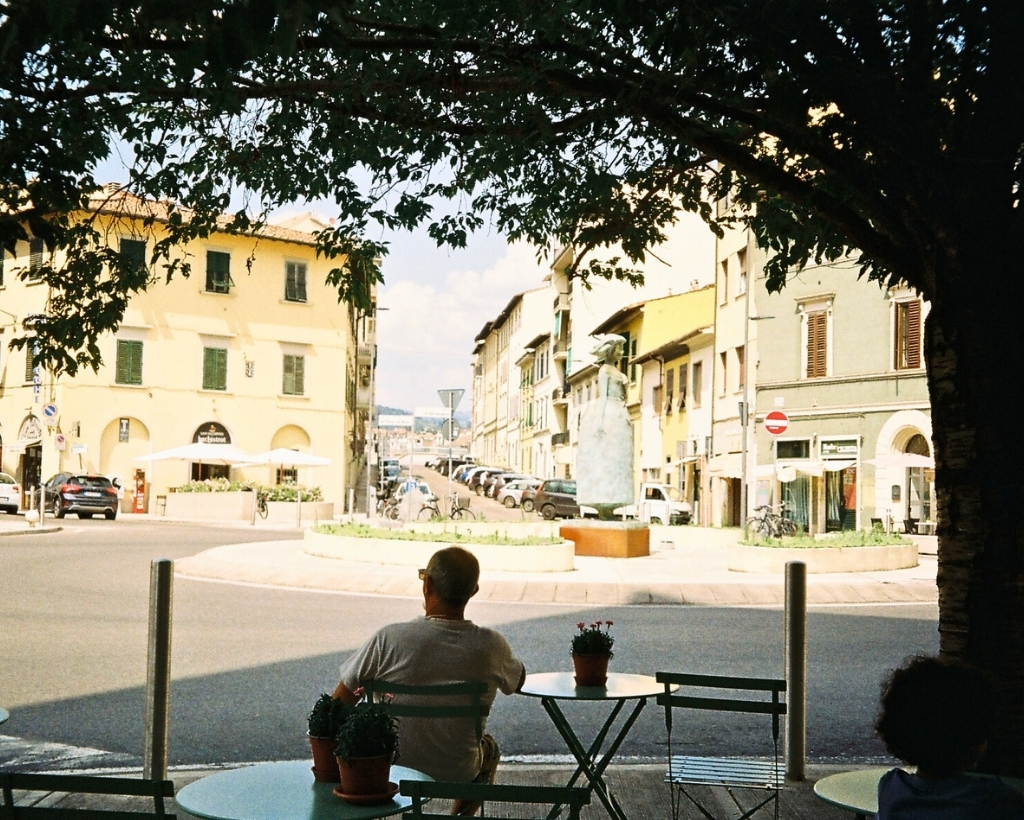
My internship at the magazine, The Florentine, demanded fieldwork to uncover stories. One afternoon, it led me through Porta al Prato, one of the city’s most ancient gates. The roads felt wider and familiar, lined with modest pasticcerie, hairdressers and gyms—necessary commercial services absent from the centre—slotted in between residential buildings. I had ventured into the neighbourhood of San Jacopino, where a contemporary statue of a woman stood in a piazza, encircled by a major roundabout lined with local restaurants and Fascist-era buildings.
Elderly residents, dressed in chestnut-coloured linen trousers and worn leather moccasins, sat cross-legged on wooden benches, dappled in the shade of overhanging trees. I stepped into Donamalina, a gelateria on the piazza’s circumference, and settled on a mango gelato.
“Cé l'atmosfera di un paesino … é un quatiere per chi vive qui, non è turistico” (It has the atmosphere of a small village … a neighborhood for those who live here, it’s not touristy), said Horticina, the ice-cream scooper, when I asked about the neighbourhood’s characteristics.
Perched at a street-side table, I indulged in observing ordinary events unfolding—just as the French novelist Georges Perec did behind the windows of Parisian cafés. Children tippy-toed in front of the ice cream cabinet, some just tall enough to peer over the rainbow of flavours in the sorbetière. Soon, their clothes would bear the evidence, prompting the familiar parental refrain, ti sei sporcata/o (you’ve dirtied yourself), as handkerchiefs swept across chocolate-smeared mouths like windscreen wipers.
To perceive beauty in these often-overlooked moments is to experience what Georges Perec called the infraordinary. Flâne is a French verb meaning to wander aimlessly and passively observe daily life; from it are derived flâneur and flâneuse, describing male and female idlers, respectively. As I’ve noted elsewhere, I would extend the infraordinary to include encounters with the extraordinary—for the “extra” can simply be unanticipated, and is seldom found when one is fixed on a certain destination.
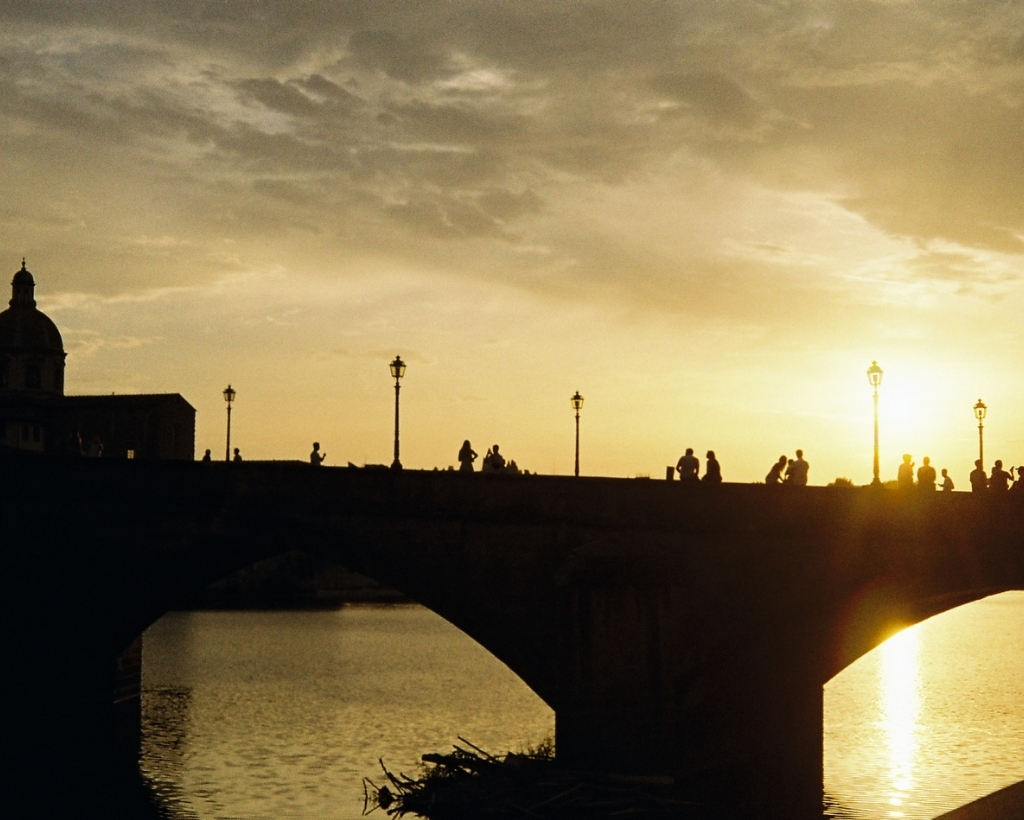
One afternoon, a friend joined my wandering. We strolled toward Circolo Rondinella del Torrino, but made a detour when we spotted an unacquainted gravel ramp that descended to the riverbed beneath the bridges of the Arno. The locals took a more riveting route—vaulting themselves over the orange brick fence barricading the river. Neither route was authorised by any map. We nested on the concrete riverbank, facing west, as the sun began to sink. Around us, university students blasted Ghali from industrial-grade speakers while rolling canne. The weed was pungent, lingering in the air like starch as the sun slipped into twilight. It was almost romantic.
Before heading to work one morning, I steered east to visit the oldest market in Florence, Sant’Ambrogio, built in 1873. I wasn’t sure if I was in the right place. Unlike the Mercato Centrale, there were no kitschy signs or tourist throngs—just an unassuming, graffitied exterior. But clues soon emerged: shoppers trundling caddies brimming with produce, voices shouting “tocca io” (my turn) in front of stalls with local Tuscan produce. The ticketing system—no numbers, no receipts—was a chorus of “tocca io,” even when it was actually my turn. Inside, Florentines ticked off their weekly butcher and cheese runs at the legion of bancherelle (market stalls), or paused at Il Trippaio di Sant’Ambrogio to tuck into lampredotto, the city’s beloved boiled stomach lining, or the humble bowl of bread soup, ribollita.
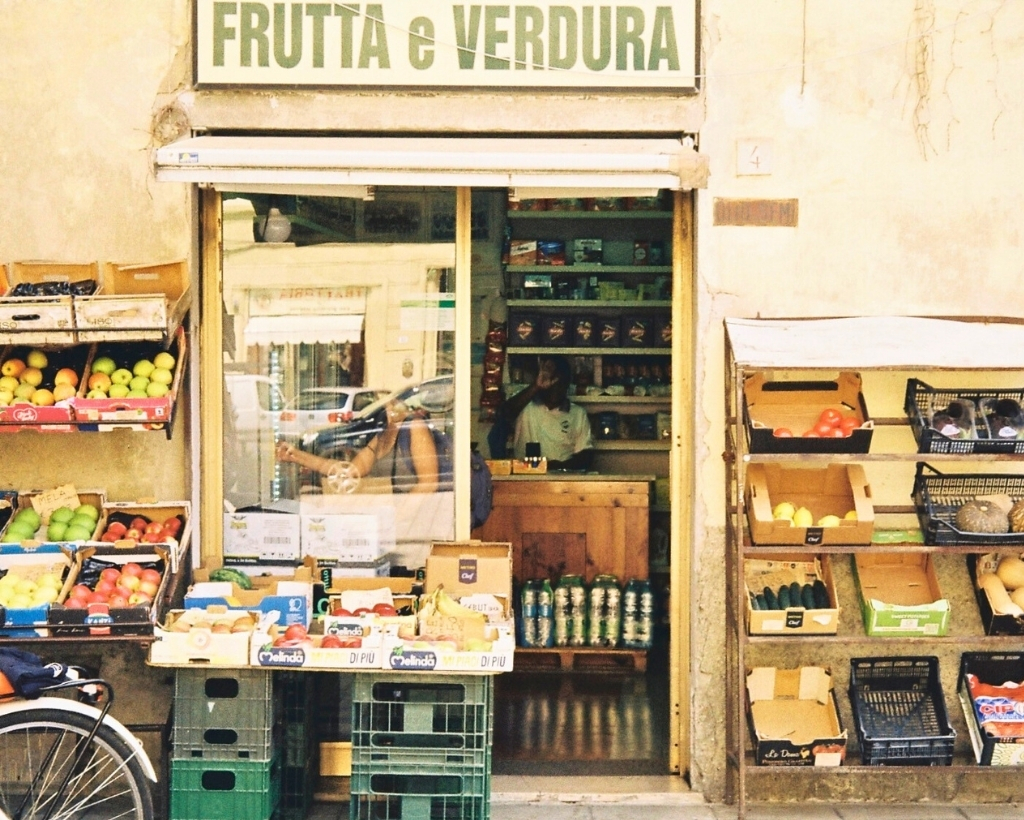
Later that month, I was sent to interview a singer ahead of her concert at the Teatro Romano in Fiesole, a small town perched five kilometres above Florence, reached by the number seven bus from Stazione Nazionale. From the piazza, I climbed the steep, stone-walled Via San Francesco toward the convent at its summit, pausing occasionally to glance back. With each turn, the view over the lush, mountainous town of Fiesole widened—and from the peak the vista swung back to Florence, its valley and cypress-lined hills rivalling even the famed Piazzale Michelangelo. From that distance, I could trace a map of my wanderings, the landmarks of the city laid out below.
I never filed a story or found a headline in the neighbourhoods. Instead, I made this list of wanderings where I had encountered the extraordinary in the ordinary.

