



Elvira's Italian dance night does Italy
From a Melbourne dance floor to Italy's Piazze: A boutique journey of music, food and belonging
A 15-night journey across Italy transforms a Melbourne community dance initiative into an immersive celebration of music, cuisine and shared heritage. What began as a modest grassroots movement has evolved into an international pilgrimage grounded in intergenerational connection.
For almost two years, “Elvira’s Italian Dance Night” has provided a welcoming space for older members of Melbourne’s Italian-Australian community to gather, dance, sing and socialise. Entirely self-funded and run on a not-for-profit basis, the evenings attract between 50 and 100 participants each month.
Founded by Elvira Andreoli, the concept is simple: create a joyful, inclusive, and safe environment where people—particularly older Italians—can reconnect with the songs they grew up with, dance, reminisce, and enjoy each other’s company.
Now, that dance floor is expanding with “Elvira’s Italian Dance Night Does Italy,” a 15-night boutique group journey across the Italian peninsula, blending regional music, culinary traditions and immersive cultural experiences. The initiative is a collaboration between Elvira, musician Tony Villella, Stefano Aloe and Teresa Corso of Est Due Travel, and the vibrant Facebook community Nonna’s Cucina Family.

Stefano and Teresa—a Calabrian-Australian brother and sister team—specialise in curated travel experiences that prioritise authenticity over mass tourism. Their itineraries favour intimate encounters with local artisans and producers over crowded tour buses and souvenir shops. The partnership grew organically: Stefano, himself a chef and a regular presence at the Melbourne dance nights, recognised that the sense of belonging created locally could be recreated and amplified in Italy.
Nonna’s Cucina Family—born during the Covid-19 pandemic as an online space for recipe sharing and culinary storytelling—now extends its ethos of communal hospitality into the travel experience.
The journey begins in Milan, gateway to Lombardia, before tracing a carefully designed route through Toscana, Emilia-Romagna, Campania, Puglia, Basilicata and Calabria. Participants will visit iconic and culturally rich destinations including Lago di Garda, Verona, Venice, Bologna, Florence, Siena, San Gimignano, Salerno, Caserta, Positano, Matera, Altamura, Alberobello, Tropea and Zungri.
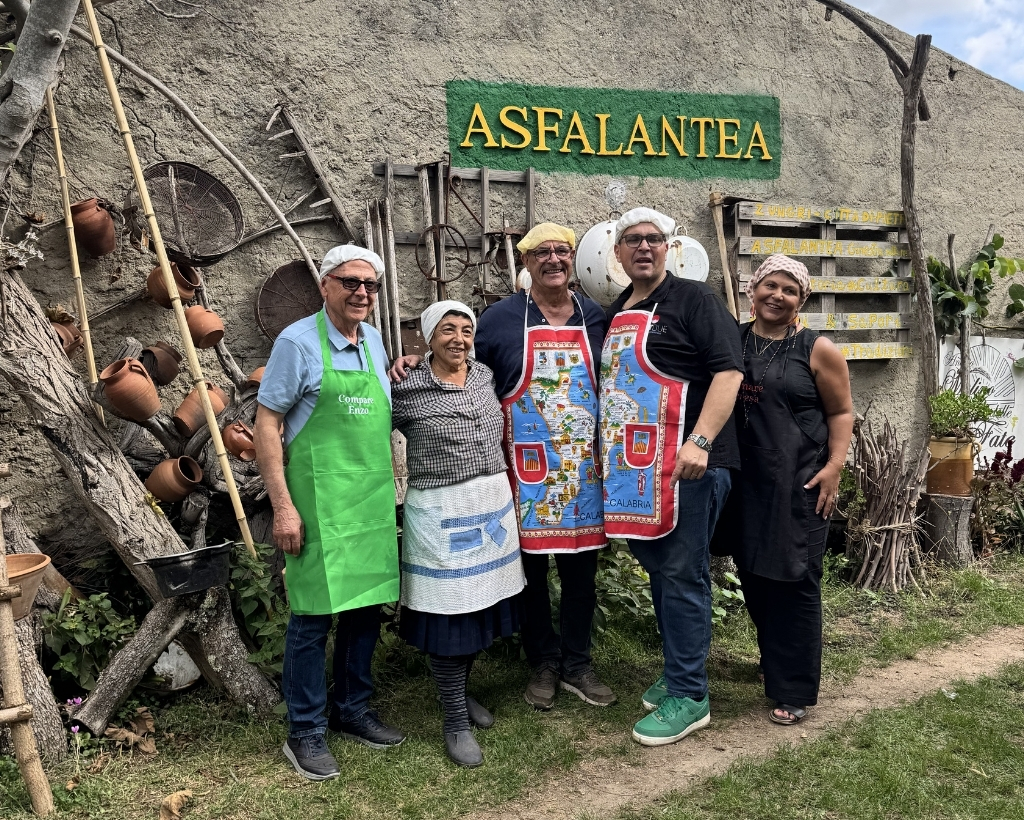
But this is not a sightseeing checklist. The itinerary integrates hands-on experiences: cheese-making workshops in Emilia-Romagna, bread-making in Puglia and Calabria, curated food and wine tastings, and regionally anchored musical events. A highlight is “La Giornata del Pane” at the home of Franca Crudo in Zungri—an intimate immersion into domestic culinary heritage. In Tropea, participants will enjoy a boat cruise along Calabria’s dramatic coastline, reinforcing the experiential rather than touristic nature of the journey.
Travel is by private bus with a dedicated driver, allowing the group to move comfortably and at its own pace. Accommodation, daily breakfast, selected lunches and dinners, and scheduled activities are included, allowing participants to focus on experience rather than logistics.
Music, however, is at the heart of the journey. Three principal concerts will take place in Toscana, Campania and Calabria, each featuring local artists and regional repertoires. Throughout the tour, Elvira and Tony will lead music workshops, small performances and spontaneous sing-alongs that mirror the atmosphere of the Melbourne dance nights.
Each participant will receive a curated booklet of songs connected to the regions visited. The intention is not simply to observe culture, but to inhabit it. Singing Neapolitan classics in Campania, Tuscan ballads in Toscana, or Calabrian folk melodies in the south is designed to reflect the psychology of many within the diaspora. Music is memory, and memory reinforces identity and belonging.
The group is intentionally limited to around 18–20 participants, a size designed to encourage genuine connection. The demographic focus is largely on older travellers, especially those who might feel hesitant about navigating international travel alone. For many, the barrier to travel is not desire but confidence. By combining structured programming with free time for personal exploration, the organisers balance collective security with individual autonomy. The social environment mirrors the monthly dance nights: inclusive, non-competitive, and warm. No one is an outsider—everyone participates.

What distinguishes “Elvira’s Italian Dance Night Does Italy” from conventional group travel is continuity. It is not a standalone commercial offering, but an extension of an existing community ritual. In Melbourne, the dance nights have become an alternative social outlet for older Italians seeking live music and conviviality. The Italian journey transposes that ritual into the landscapes that first gave rise to the songs and recipes.
The journey operates on multiple levels: as boutique travel, as cultural education, as intergenerational memory work, and as diaspora reconnection. More broadly, it reflects a growing pattern within migrant communities—self-organised cultural mobility. Rather than relying on institutions to create pathways, individuals and small collectives are building their own.
The collaboration between Elvira, Tony, Stefano, Teresa and the Nonna’s Cucina Family is built on trust, organically forged over time. It is relational rather than transactional. In a world characterised by accelerated tourism and Instagram itineraries, “Elvira’s Italian Dance Night Does Italy” proposes something slower and more human: travel as shared memory-making.
What began on a dance floor in Melbourne now moves through piazze, kitchens and concert spaces across Italy. And at every stop, it carries the same purpose—to bring people together through the languages of belonging found in music and food.

