


Casa San Gabriel: an Umbrian revival
A 16th century farmstead turned agriturismo rivals those of Tuscany
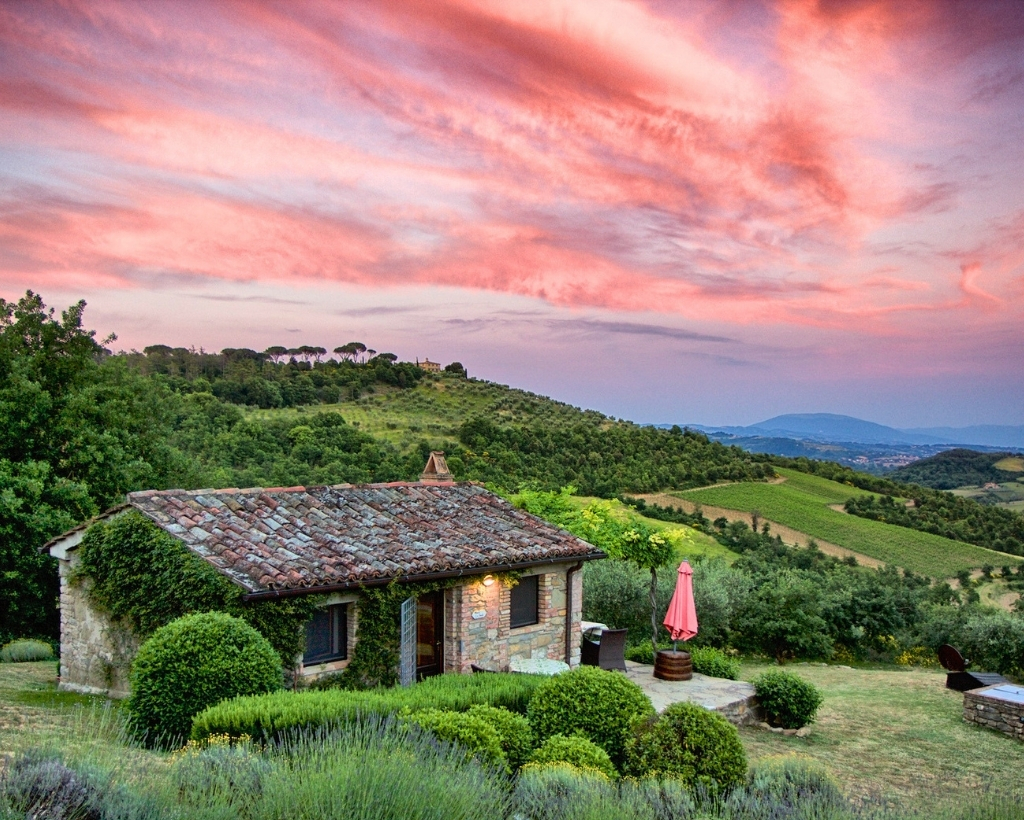
Set amid unspoiled Umbrian vistas, Casa San Gabriel began as a forgotten 16th-century rural estate. After two decades of careful restoration, David and Chrissie Lang transformed its once-abandoned cottages into an agriturismo now on Michelin’s radar.
In 2004, David Lang couldn’t imagine living in Umbria forever. His Umbrian-born daughters are now adolescents, and even after two decades, the valley’s verdant vistas, so vast the eye cannot find their terminus, remain as spectacular as the first day he and his wife, Chrissie, arrived.
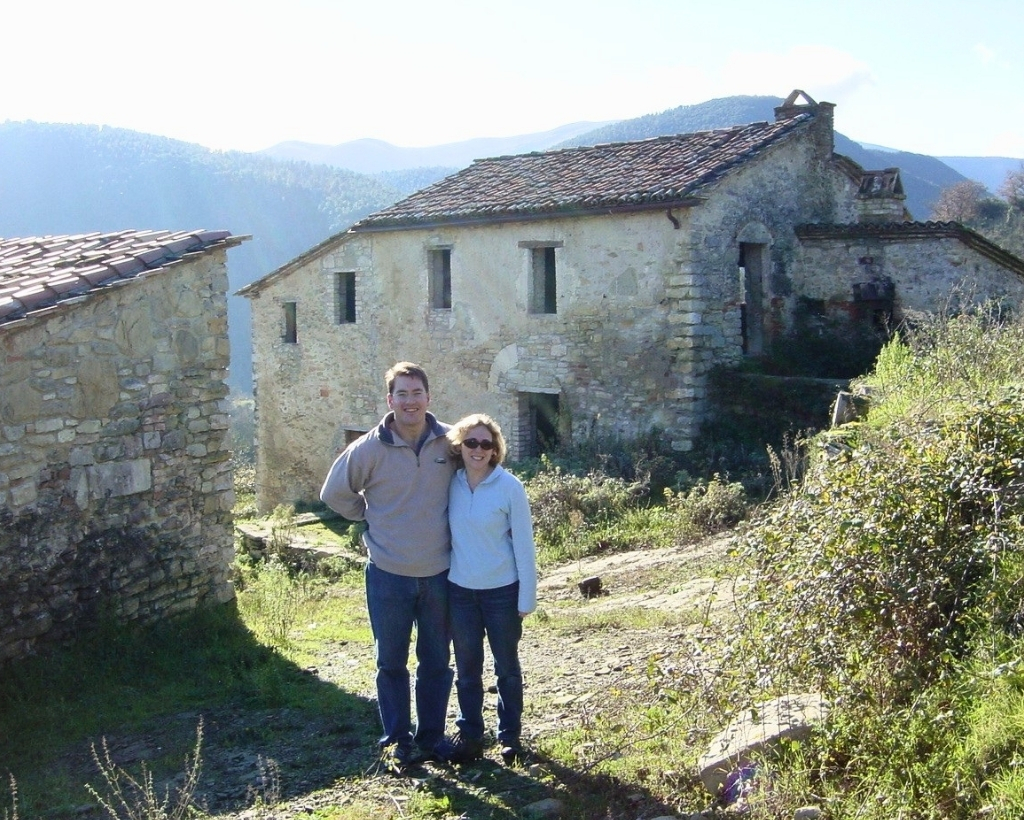
More than twenty years earlier, Chrissie Lang abandoned her suitcase at the front door of their London home without breaking stride. She found her husband in the living room and swung open the viewfinder of her camcorder. On the pixelated screen, a hamlet of three stone-walled cottages and a larger farmhouse stood atop a hill, cloaked by undulating mountains and a lush Umbrian valley below. But the camcorder’s low-resolution footage couldn’t hide the cottages’ dilapidation: water streamed through the buildings, unmistakable evidence of 40 years of abandonment.
“I found this property,” Chrissie said, having just returned from a property-finding trip in Italy. “I think it’s perfect.” David agreed, both envisioning what the 16th-century farmstead could become if lovingly restored: a remote retreat that, on a map, sits only twenty-five minutes north of Perugia; a collection of charming stone dwellings, discreetly apart to ensure guest privacy yet close enough for them to attend to; and a lap pool perched above the property, with unbroken views spanning as far as Assisi.
Chrissie and David married in Cambridge in 2003, having first met in Melbourne a few years earlier while Chrissie was visiting from the UK. Days after the wedding, David walked away from his teaching job, Chrissie from her consulting work, and they headed straight for Umbria. What awaited them was less a honeymoon than a trial-by-builders. The property was structurally sound but missing windows, doors, and any real comfort. They named it Casa San Gabriel, inspired by Hacienda San Gabriel, a former monastery turned tranquil luxury hideaway they had visited during a trip to Mexico. Like Rome, the restoration was not going to be completed in a day. In fact, it took months longer than expected.
Restoring the buildings was a relentless task in preserving their antique features. The main farmhouse, split across two levels—a nod to its former function, with livestock housed below providing warmth to the rooms above—had a blackened fireplace and smoldered beams. “The previous owners smoked themselves stupid,” David says. Yet amid damp proofing and some subtle structural work, traces of its centuries-old past peeked through: 17th-century Baiocchi coins, believed to bring luck, had been applied to the beams.
Antique details honour the past, while diligent restoration with local materials have given the cottages a new life. Vines climb the façades, terracotta pots cluster around the edges, and inside, each cottage functions as a self-contained apartment, complete with a kitchen, private terrace, and sleeping capacity ranging from two to six. Their former lives are commemorated on plaques at their entrances: the former hayloft, Il fienile; the wine cellar, La cantina; and the old stable, La stalla.
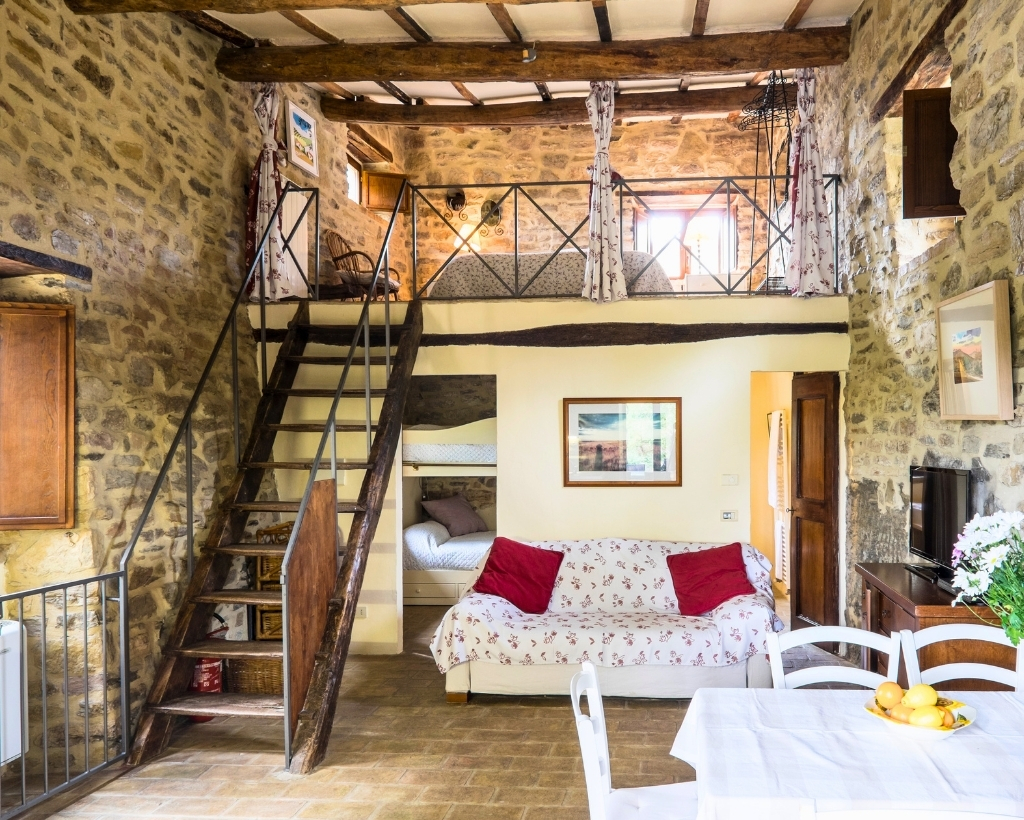
Il fienile, the largest of the cottages, stands at the top of the valley like a sentinel. The staircase leading to the mezzanine remains intact, and a terrace and private garden stretch out below, shaded by a generous oak tree that begs for a summer nap. La stalla boasts a wide panoramic terrace, a kitchenette, and a cozy dining nook; the window that once functioned as a pig slot now frames sweeping views of the valley. La cantina, more intimate and suited to couples, preserves its original beams, terracotta tiles, and centuries-old staircase climbing to the bedroom above.
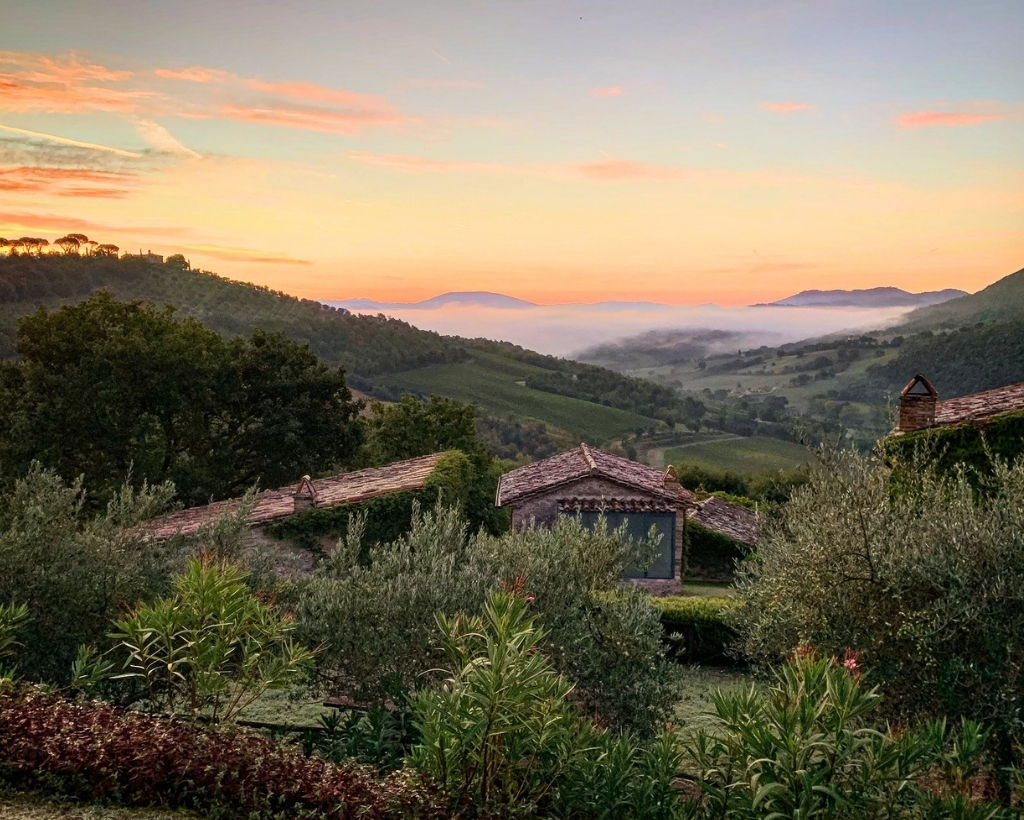
Beyond the cottages, the pool crowns the hill as the Umbrian countryside unfurls below—olive groves, vineyards and uninterrupted views stretching to the Apennines. By day, the elevation brings a cooling breeze; by evening, the sun drapes itself between the mountains. “There’s this long, almost unfiltered view where you look down the valley through the hills with the mountain in the background,” David says.
Securing bookings was an early challenge. This was the dial-up era, when uploading a photo to their website could take half a day, and social media for marketing was still in its infancy. Most travellers overlooked Umbria, distracted by Tuscany’s postcard-perfect hills and wineries. Yet its obscurity proved an advantage: unspoiled landscapes, proximity to Perugia, Gubbio, Assisi, and Cortona, and a distinctly local character—menus still in Italian, children serving in small town restaurants, and shops closed on Sundays. While bookings were scarce, David returned to teaching, this time in Perugia, and Chrissie ran a property management business. Interest began to trickle in when a local newspaper caught wind of the property and a real estate agent started sending high-profile clients, including the British Ambassador to Rome. Then came the opening of Perugia Airport, just 25 minutes away, making Umbria far more accessible than before.
Casa San Gabriele had begun skeletal, the border of a puzzle waiting to be completed. With each booking, Chrissie and David added small touches that brought the cottages to life: plants, finer linens, a complimentary breakfast on the first morning, a bottle of wine on arrival. Alpacas and goats soon roamed the lower fields, greeted each morning by children carrying feed buckets. Two loyal dogs accompany guests along the valley’s trails, offering comfort to families missing their pets.
At the bottom of the valley, Chiesa del Carmine and its neighbouring farmhouse—once the landowner’s home when the surrounding properties were tenant farms—were purchased in 2006 by an English couple. With a shared appetite for renovation, Chrissie and David helped restore the 13th-century church and transformed the farmhouse into a country house sleeping fourteen. The old vineyards were torn out in 2011, and the 5.7-hectare land replanted with Trebbiano Spoletino, Sangiovese, Sagrantino, Merlot and Cabernet Sauvignon. The abandoned valley evolved into a full agriturismo experience, nurtured by the pragmatism of David’s upbringing on a sheep farm in Cressy, Victoria. At the winery, Vineria del Carmine, guests now take part in wine and olive oil tastings, vineyard tours, truffle hunting, and the perennial favourite, pizza-making classes.
The winery’s restaurant offers refined Umbrian dishes, prepared in a state-of-the-art kitchen. One of David’s seasonal favourites is the slow-cooked pork belly with locally produced saffron foam. The restaurant has already caught the eye of the Michelin Guide. “We're not chasing stars,” David says, “but it would be great to get into the Guide.”

