


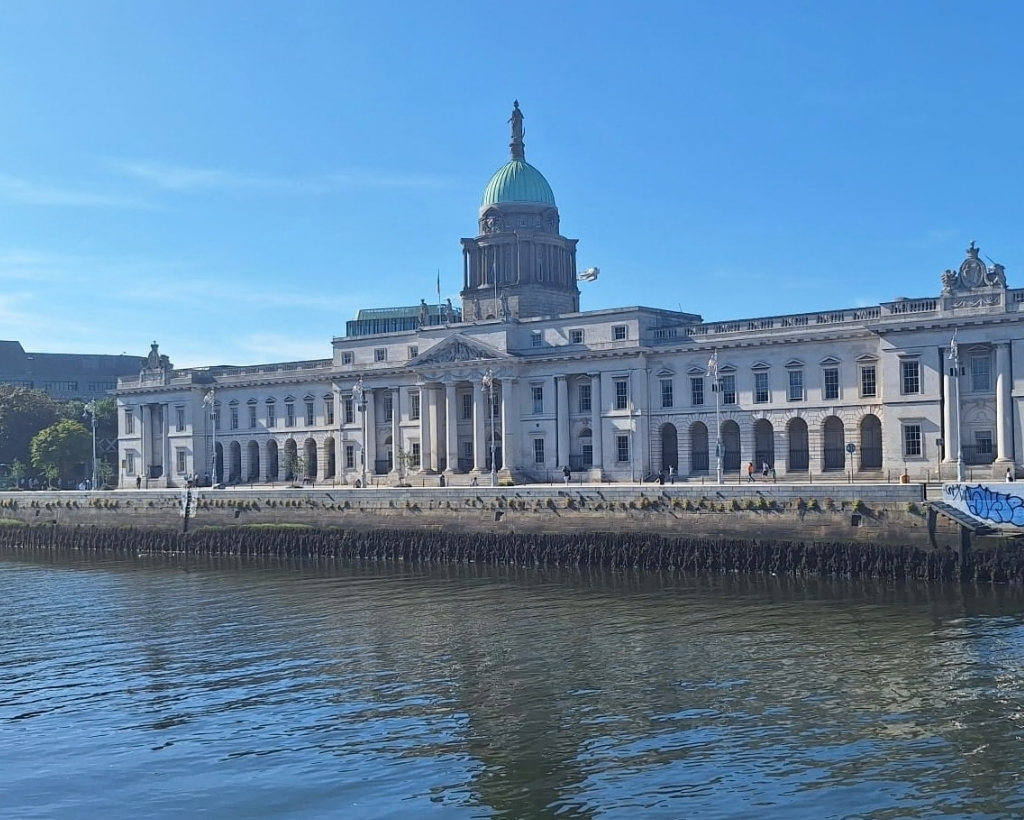
Italy & Ireland: An Enduring Kinship
An Italo-Austraian discovers Italy's past and present in Dublin
Italian and Irish cultures share deep roots in faith, community and migration. Their connection endures through food, social traditions and artistic exchange, but most notably in their shared ability to face hardship with humour.
Before moving to Dublin, the link between Ireland and Italy had never crossed my mind. Coddle isn’t quite the same as minestrone, and Birra Moretti could hardly taste like a pint of Guinness. But when I got a job offer and told my family I was moving to Ireland, one of the first things my mum mentioned was the longstanding camaraderie between the Irish and Italians.
There are some obvious parallels. Both countries have a strong Catholic tradition, with churches and grottos stretching far and wide, and both hold a deep love of music. Yet the connections are far more nuanced and go beyond what meets the eyes and ears.
Growing up in Melbourne, I was constantly surrounded by both the Italian and Irish diasporas. Each has a history of mass emigration, forming tight-knit communities abroad that carry their customs, faith and identity. They’ve left a lasting impact wherever they’ve settled.
Italian emigration to Ireland has left an enduring legacy through food. Wandering Dublin’s cobblestoned streets reveals not only a high concentration of Italian restaurants but also a notable number of Italian-named fish and chip shops, such as Ezio’s, Sorrento Takeaway and Toni’s—to name only a few among many.
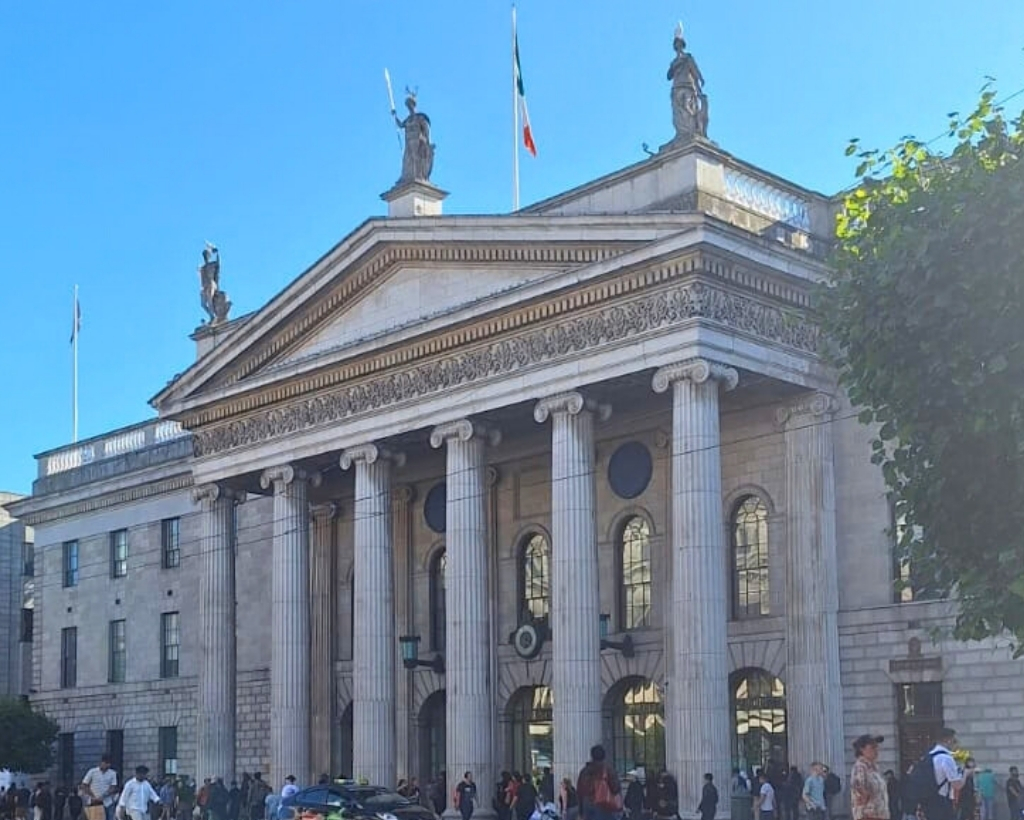
The first fish and chip shop (often called “chippers” across Ireland) was founded in the 1880s by Italian immigrant Giuseppe Cervi, who had mistakenly disembarked an American-bound ship in Cork. He opened his shop beside Trinity College in central Dublin. In the 1950s, when more than 6,000 Italians settled in Ireland, chippers spread across the country. Italians have mastered many dishes, and the classic pairing of baccalà with patatine seems a natural addition to the repertoire.
Food aside, one of Italy’s most lasting contributions to Ireland came through Italo-Irish philanthropist Charles Bianconi, who moved to Ireland in 1802. Known as “the man who put Ireland on wheels”, he created the first regular public transport system through a network of horse-drawn carriages.
Migration also moved in the other direction. James Joyce, one of Ireland’s most famous authors, lived in Trieste, where he began writing Ulysses. There he met Italo Svevo, one of Italy’s great modernist writers, with whom he formed a close friendship.
Social culture offers another point of overlap. The spontaneous Italian habit of meeting friends in a piazza for a coffee or going for a passeggiata finds its Irish equivalent in gathering for a pint at short notice. Both cultures place genuine value on checking in with friends and being inclusive—traits central to each country’s identity.
Perceptions of a “stereotypical” Italian household often mirror those of an Irish one: warmth and openness towards friends, neighbours and visitors. Sharing meals, stories and laughter is essential—and intergenerational. Extended family networks are strong; elders are respected for their wisdom and play a close role in a child’s upbringing. Home-cooked food is a form of love and a way of celebrating milestones as a family. No matter how far a person travels, a family gathering remains an essential touchpoint of belonging.

For Italians living in Ireland, there is ample infrastructure to recreate a sense of home. The Italian Institute of Culture in Dublin hosts cinema screenings, live performances, literary events and the Italian Fusion Festival. Particularly noteworthy are the virtual tours the Institute offers of Italy’s ancient icons—something even my dad once joined remotely (albeit at 4am Melbourne time). The Italian-Irish Chamber of Commerce, along with Radio Dublino and Radio Irlanda, further strengthens the community fabric.
But above all, the most striking similarity between the two cultures is their attitude towards hardship. Both possess an instinctive ability to make light of a dark situation. This is evident both online and in daily life. Just as LadBible Ireland and Irish comedians use memes, reels and sharp humour to observe everyday pressures, Italian accounts like TML Planet and Sapore di Male turn local frustrations—bureaucracy, uncertainty and everyday chaos—into bursts of collective laughter. It reflects a shared understanding that while life can be complicated and unpredictable, it is important to find humour within it.

This is hardly new. Italian and Irish storytelling have long favoured wit over pessimism in difficult times. In Italian cinema, the Pink Neorealism genre of the 1950s and ’60s injected light and energy into stories set against the uncertainty of post-war life. Il Sorpasso, for example, uses a two-day road trip from Rome to Tuscany to balance the liberation of laughter with an underlying feeling of unease during a period of rapid social change.
Irish literature has worked in a similar way. Dubliners, by James Joyce, is a collection of short stories that satirise various aspects of Irish life. The everyday disappointments of its characters are softened with glimmers of humour, revealing resilience beneath the surface. Samuel Beckett’s tragicomic Waiting for Godot shows how people can keep going even when things make little sense. “Nothing is funnier than unhappiness,” he wrote in his 1957 play Endgame.
The Italian–Irish connection is unique in that both cultures instinctively use comedy as a form of courage. Whether through cinema, novels, plays, or in daily life, laughter is never a retreat from tragedy but a way of confronting it. After all, “it’ll be grand”, as the Irish are wont to say, echoes the Italian reassurance “andrà tutto bene” (“everything will be alright”).

